• Looking Back: The Comforting Myth of Nostalgia

    By Celeste Hoover

    The beginning of this semester came all too quickly for me. Soon after the announcement of two weeks in online class, I found myself on a bleak, empty campus. The precaution was necessary, yet, with little open and very few students returning, I inevitably had lots of free time. In my endless scrolling through Netflix (and literally any other streaming platform that offers a student discount), I began a list of favorite movies to revisit: Beauty and the Beast, Harry Potter, Wall-E. The comfort of watching movies from my childhood lent a warm and fuzzy feeling to my cold, cold dorm room. With the stressful possibility of another year on Zoom, I found solace in looking back. I was not the only one. Since we first began to quarantine, decades-old movies, songs, and video games have surged in popularity as a source of comfort. 

    The desire to return to beloved memories is deeply ingrained within us. Our wish to revisit Hogwarts or Narnia is merely a continuation of a pattern that first began thousands of years ago. Many of humanity’s earliest stories, spanning from Classical mythology to Shinto legend, the Bible, are all connected by the same impulse. The modern popularity of nostalgia can at least be partly explained by analyzing these kindred myths and our changing perception of the ‘look back’.

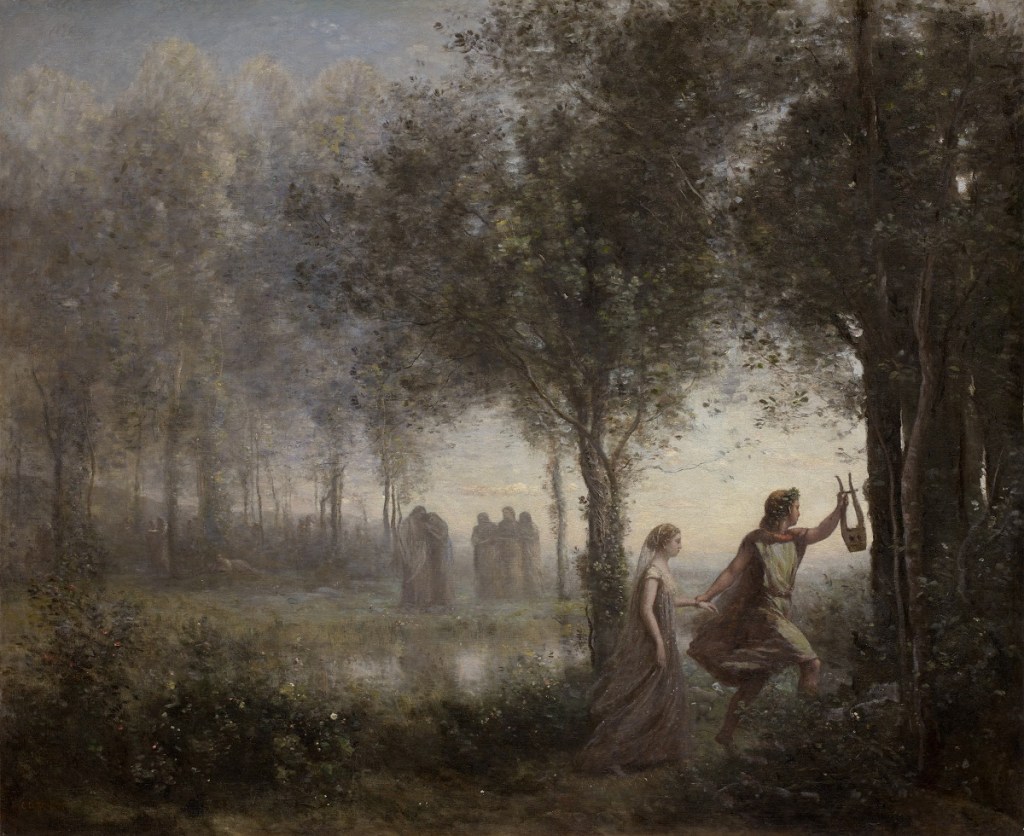
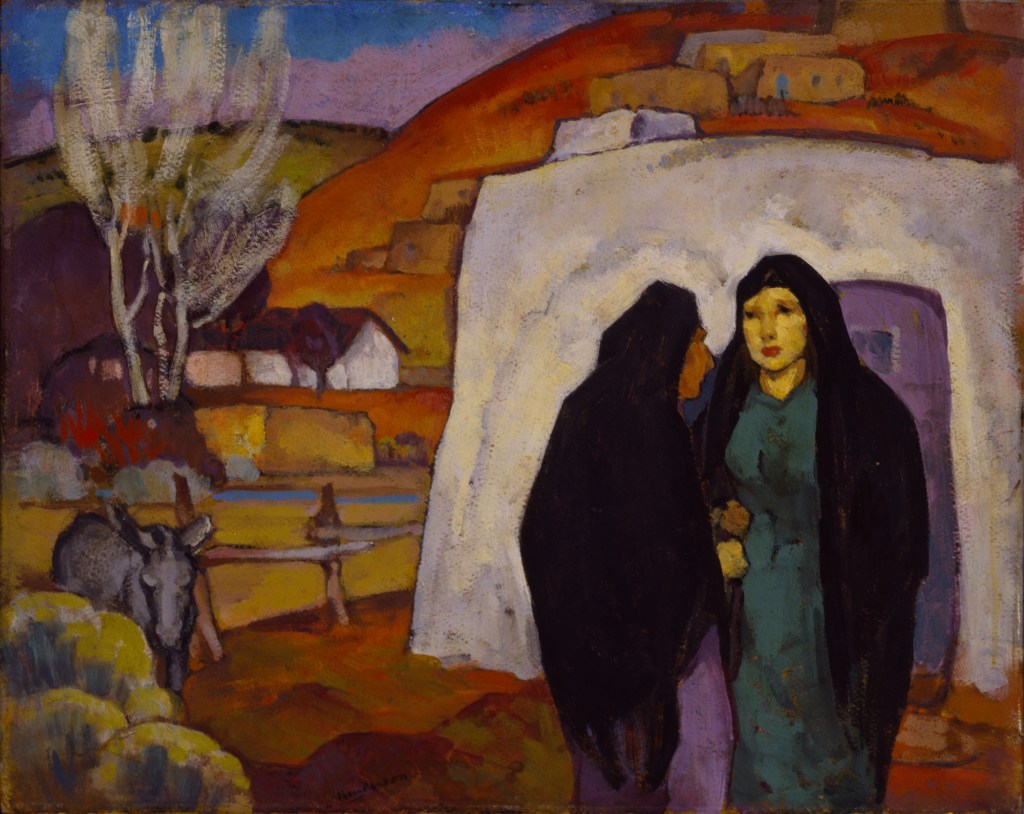
    George Frederic Watts (England 1817-1904)

    The desire to turn to look upon a lost love can be found in myths around the world, but it is perhaps most famously recognized in the Greek tale of Orpheus. The young musician journeys to the Underworld in hopes of reuniting with his love, Eurydice. Hades agrees to let her follow Orpheus back into the realm of the living on one condition—that he does not look back. Orpheus has almost completed his journey when he ultimately disobeys and turns to look upon Eurydice, only to watch her ghost fade away as she is pulled back to the Underworld. Tragically romantic, even Virgil’s narrator pities Orpheus as “one to be forgiven, if the spirits knew how to forgive.” His mistake is a very human one. It does not come from a desire to rebel but from a ubiquitous and sympathetic emotion: grief. In the tale of Orpheus, we recognize our nostalgia for what was loved and our fear of what is still to be lost.

    Sodom’s destruction; Lot and daughters escapes

    Similar to Orpheus in the Classical tradition is the tale of Lot in the book of Genesis. In this tale, God sends his angels to destroy Lot’s village, allowing only Lot and his family to flee under the strict instruction that they do not look back upon their home. Lot’s wife, however, does turn to see her home’s destruction and is transformed into a pillar of salt by God. Nancy Epton observes that Lot’s wife’s desire to look back is motivated by the same “quintessentially human qualities of nostalgia and disobedience” as Orpheus. Both risk a god’s wrath in their desperate looks back upon the memory of a cherished past. Though Lot’s wife has no name, no dialogue, and only a single verse (Genesis 19:26), her desire to gaze one last time upon her beloved home and community is incredibly moving. It’s not her lack of resolve that stays with us, but a sympathy for human temptation and emotion.

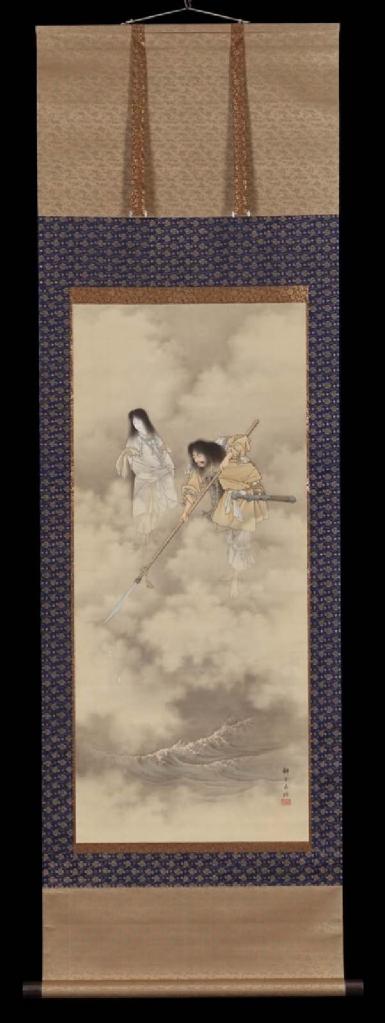
    Izanami and Izanagi Creating the Japanese Islands
    By Kobayashi Eitaku (Japanese, 1843–1890)

    A poignant glance back unites these two stories from the Western canon, but it also can be found globally. In Japan, the Shinto legend of Izanagi closely parallels that of Orpheus. The creation god Izanagi falls in love with the goddess Izanami. When Izanami is killed, Izanagi disobeys her orders and turns to gaze upon her in the Underworld. He is horrified at what he sees and flees to his eventual destruction. Izanagi is part of the long list of characters to be overwhelmed by grief for something loved, forced to suffer in order to experience their love once more. In each of these myths, grief and nostalgia are intimately connected. It seems only love of what has yet to be lost can overcome the fear of death. Izanagi, Orpheus, and Lot’s wife are all victims of what is evidently a universal desire to look back. 

    The frustration of human fallibility is everywhere in these myths. We simultaneously scold the protagonist while recognizing our own predilection for a fond memory. As Epton writes, the “single command cannot be followed, not because of vice or vanity, but because of a basic, painfully recognizable wistfulness to embrace an unreachable past.” The desire is profound and noble, but also very human. Nostalgia and its allure, not its punishment, are what unites these stories. Though the myths outwardly condemn the desire to look back, it’s their tragic depiction of past attachment that appeals to us.

    However, these uncannily similar stories share a practical origin. Ancient myths often took advantage of compelling tropes to justify the status quo. Prominent early 20th-century anthropologist Bronisław Malinowski writes that myths tended to advance the agendas of those in power. He dubbed the stories ‘charter myths’ that were intended to warn listeners against disobedience and ensure cultural conformity. Leaders of ancient civilization used myths like those of Orpheus, Lot’s wife, and Izanagi as an allegory for the importance of obeying superiors. Nostalgia, with its indulgence of the past, was not thought to benefit future community growth and was thus condemned. So why do we think of Izanagi as a tragic figure, not a criminal? Why do we pity, not scorn, Lot’s wife and her sin? Is nostalgia a vice or a benevolent rebellion? 

    In the more recent past, society and its intellectual leaders have tended towards vice. Nostalgia’s criminal reputation persisted well into the twentieth century; in 1914 Freud used the example of Orpheus to denounce nostalgia in his work ‘Remembering, Repeating, and Working Through.’ He invokes the story to illustrate the supposed harmful psychological effects of memory and recursivity in grief. Freud’s theories reinforce a traditional interpretation of the myth—indulging in nostalgia incurs punishment. However, one only has to look at these ancient stories to see that we will inevitably return to comforting memories, regardless of the consequences. 

    Modern philosophy has recognized the more humane element of the myth. New research demonstrates the increased importance of nostalgia in the healing process. The urge to look back provides a positive and constructive way to reconnect with our pasts, especially when we are faced with the tragedy and uncertainty of a pandemic. Harnessing that desire can be a therapeutic tool. Orpheus has found a resurgence in popular culture—blockbuster movies like Inception and Portrait of a Lady on Fire are based on this more humane interpretation of the myth. Our culture is beginning to recognize the benefits of nostalgia. If we were to rewrite Orpheus’ story today, knowing what we know now, looking back would probably be to his advantage. 

    The nostalgia of these myths can be seen in that same part of us that wants to curl up and watch our favorite childhood cartoon for the fortieth time. That’s not to say that a god warned you against it, or you’ll be turned into a pillar of salt if you do—merely that our return to nostalgia is the continuation of a trend that was first told thousands of years ago. The desire to look back on favorite memories, people, and experiences are at the core of stories that have been told to us for generations. We now know that nostalgia is a constructive force that unites us in the face of an uncertain future. And we only have to look back for proof. 

  • From Barns to Greenhouses: Adapting Murakami in Burning

    By Jack Gross

    When you try to put it in words it doesn’t sound like anything special. But if you see it with your own eyes for ten or twenty minutes (almost without thinking, she kept on performing it) gradually the sense of reality is sucked right out of everything around you. It’s a very strange feeling.

    – Haruki Murakami “Barn Burning”

    Prolific Japanese author Haruki Murakami has written world-renowned and critically acclaimed novels such as Kafka on the Shore, The Wind-Up Bird Chronicle, and Norwegian Wood. Murakami’s work has garnered recognition across the world, due in large part to the universality of his writing. However, what truly elevates his work above his contemporaries is the atmosphere and tone he is able to communicate. Eliciting comparisons to Hemingway because of his simplistic and direct syntax, Murakami’s postmodernist work occupies an intangible liminal space between hyperreality and illusory dreams. While on the surface this seems naturally cinematic, a lot of Murakami’s work comes in the form of internalized dialogue and thought, a practice that can only be translated to film via clunky narration. This is why filmmakers have struggled to adapt Murakami’s work while keeping its enigmatic intricacies firmly intact—that is until Lee Chang Dong’s 2018 film, Burning, based on one of Murakami’s short stories titled “Barn Burning.”

    “Barn Burning” tells the story of a middle-aged writer that meets and begins a complicated friendship with a much younger woman, who suddenly decides to go on a trip to Africa. When she returns, she does so with a young enigmatic man with large sums of money. The protagonist feels a slight level of unease with this Gatsby-esque character. One day, the mysterious man and young woman decide to visit the protagonist’s house on short notice. After dinner, the woman takes a nap and the man and narrator smoke weed. Here, the man tells the narrator that he likes burning down abandoned barns, and has picked one near the narrator to burn down next. Following this, the couple leaves, and the narrator makes a map of all the neighboring barns so he can constantly check to see if any have been burnt down. As time passes, the narrator never finds evidence that a barn has been burnt, but the young woman he met has disappeared. The narrator does run into the man one last time, who insists he did indeed burn down a barn near the narrator. The short story ends with the narrator cynically reporting “I still run past the five barns every morning. No barn in my neighborhood has burned down. And I haven’t heard about any barn burning. December’s come again, and the winter birds fly overhead. And I keep on getting older.”

    The core of this narrative is still very much intact in Lee Chang Dong’s adaptation, which turns 13 pages of text into a nearly two and a half-hour film. However, there are many changes in the film that, in my eyes, served to further elevate Murakami’s work by firmly connecting the story’s purposeful ambiguity to contemporary political and socio-economic issues emerging in South Korea. The first change from the story to the film involves the setting, which shifts from Japan to South Korea (home of Lee Chang Dong). In “Barn Burning,” no names are presented, which is thankfully not the case in Burning. The protagonist is named Lee Jong-su, the mysterious boyfriend is named Ben, and the woman is now Shin Hae-mi. Another striking revision in the film is the age of the protagonist, which transforms him from a seasoned and cynical middle-aged writer with a wife to a naive and idealistic recent college graduate with aspirations to become a writer. 

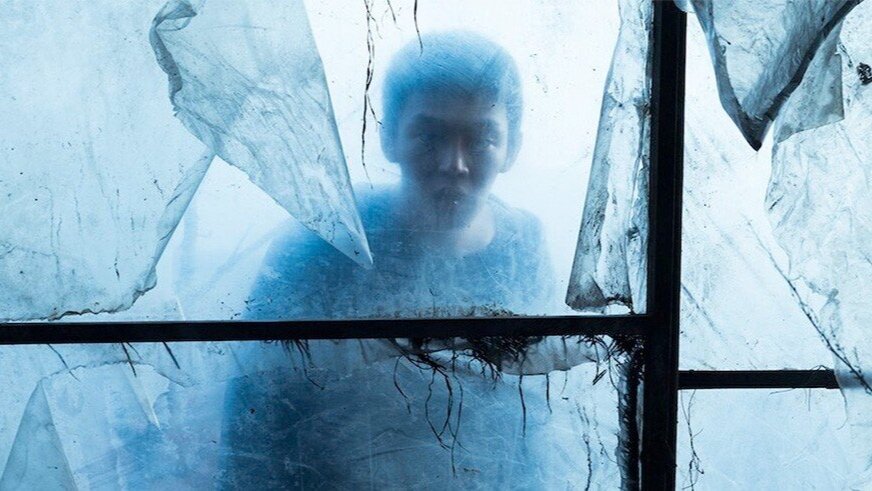
    Lee Jong-su glances into a semi-opaque greenhouse to investigate whether or not it’s been burnt down by Ben.

    While social status played a minor role in the short story, in the film, it is everything. Lee Jong-su is clearly meant to represent the working class, which is vividly reflected in the battered truck he drives, the unglamorous cluttered house he lives in, and his constantly revisited obsession with the N. Seoul Tower, a clear metaphor for high class and luxury. Lee Jong-su’s interest in the tower goes beyond fascination and journeys into the realm of sexual gratification. In one scene, he masturbates as he looks out the window at the sky-scraping building, in what feels like a strikingly visceral reimagining of the green dock light from The Great Gatsby. The concept of class struggle and existential determination is further cemented by Shin Hae-mi’s monologue surrounding “The Great Hunger,” where she explains how Bushmen of the Kalahari Desert experience either “Little Hunger” (hunger for food and survival) or “Great Hunger” (hunger for the meaning of life). Thematically, she suggests that those struggling to survive (the working class) are unable to search for and ponder meaning in life due to their preoccupations. While “Barn Burning” seemed to mainly concern itself with the ever-complicating nature of communication, meaning, and truth, Burning establishes itself as a prophetic examination into the complex and ambiguous cultural landscape we all live in. 

    The most telling change Lee Chang Dong elected to make in his film is not the setting, the added subplot, or the numerous additional scenes, but rather one small detail that I believe tells you everything you need to know. Instead of burning down barns, in Burning, Ben says he burns down greenhouses. But why? First, it seems as if this is an important cultural alteration of Murakami’s original story, due to the commonality of greenhouses in South Korea. Yet there is certainly more to this substitution, because switching the titular barns to greenhouses was not necessary, as South Korea does have barns as well. The reason for the switch instead is directly connected to both the purpose of a greenhouse itself and to Lee Chang Dong’s considerations for making Burning

    Inside a greenhouse is growing vegetation—at first there are only seeds deeply buried underneath the soil, and after sunlight and water, they sprout into various plants. In multiple interviews with various publications, director Lee Chang Dong discusses his reasoning for adapting this Murakami short story. In one conversation, he says he was interested in the singular events in Murakami’s “Barn Burning,”, but he “wanted to expand this mystery through cinematic means into a commentary on the mysteries of the times we are living through, and how ambiguous our lives actually are.” In another interview, he says “the film, on the surface, seemingly follows the smaller mysteries; Hae-mi’s disappearance, finding if the houses have been burned, but my wish was to have that keep expanding into the bigger and bigger questions of life; namely, the mystery of life and the world as it is today.” These two quotations, to me, are the key to Lee Chang Dong’s adaptation, and explain why he chose greenhouses. At the heart of the transfer between “Barn Burning”and Burning is growth, the extension of ideas beneath the surface, and the burgeoning mysteries that don’t simply permeate through a singular protagonist, but rather serenade us all as we traverse the various complications, implications, and miscommunications of life. So why eliminate the titular barn? Because Lee Chang Dong wanted to erase all forms of limitation in an attempt to explore the universality of mystery. What better visual allegory of this extension and earthly rendition of Murakami’s short than substituting a barn for a vegetative greenhouse?  

    Lee Chang Dong viewed Murakami’s 13 pages as a starting point, one that he knew with the proper treatment could sprout into something more, something universal and applicable to real-life struggles. This is the key to understanding why Burning works as an adaptation, because it takes the essence of its source material, and using the filmic language, extends it far beyond its initial reach, situating itself in the realm of social and political commentary. While many filmmakers would struggle with Murakami’s rich and complicated internal monologues, Lee Chang Dong found a way to brilliantly externalize them and grow them to a scale much beyond that of the short story. Additionally, both “Barn Burning” and Burning work to plant seeds in your mind, to nestle their way into your subconscious, and to force you to ask questions that can never be answered. Unlike Shin Hae-mi, both the short story and film view Little Hunger and Great Hunger as a false dichotomy, one perpetuated by those on top of the economic ladder (or N Korean Tower). This is why I believe Lee Chang Dong opted to instead have Ben burn down greenhouses, and this is also why I believe Burning works as such an impressive adaptation. Your mind is a greenhouse, and with the proper sunlight, like Lee Chang Dong’s Burning, your seeds will sprout, and you will hunger for the meaning of life.

    Shin Hae-mi performs the dance of Great Hunger as the sun sets, serving as both an interpretive dance for the mysteries of life and as a physical representation of enigmatic movement.

    With this case study in an adapted work surpassing its source material, it’s inevitable that questions arise surrounding the validity, necessity, and function of adaptations. If something can be learned from Lee Chang Dong’s adaptation of “Barn Burning,” it’s that limitations are self-imposed obstacles that should regularly be defied if one intends to truly extract the essence of a source material and make it something more. However, not all source material is ripe for this translation, something Lee Chang Dong understood. For those looking to adapt something into something else, they should view the source material as a foundation to build on, or as a canvas in which to paint on. Artists should in no way feel chained to a story when adapting it, rather they should feel inspired to add their own idiosyncrasies, artistic flourishes, and personal insight. Whether it’s video game to movie, movie to book, book to another book, or any other of the limitless combinations of artistic mediums, adaptations should be viewed as extensions, not soulless reiterations. The work of an adaptation should be to put the original material in a greenhouse and to let the seed sprout into a wholly unique and separate entity rooted in a familiar narrative. 

  • Stories from the Megabus: a Modern Oral Tradition

    by Lana Haffar

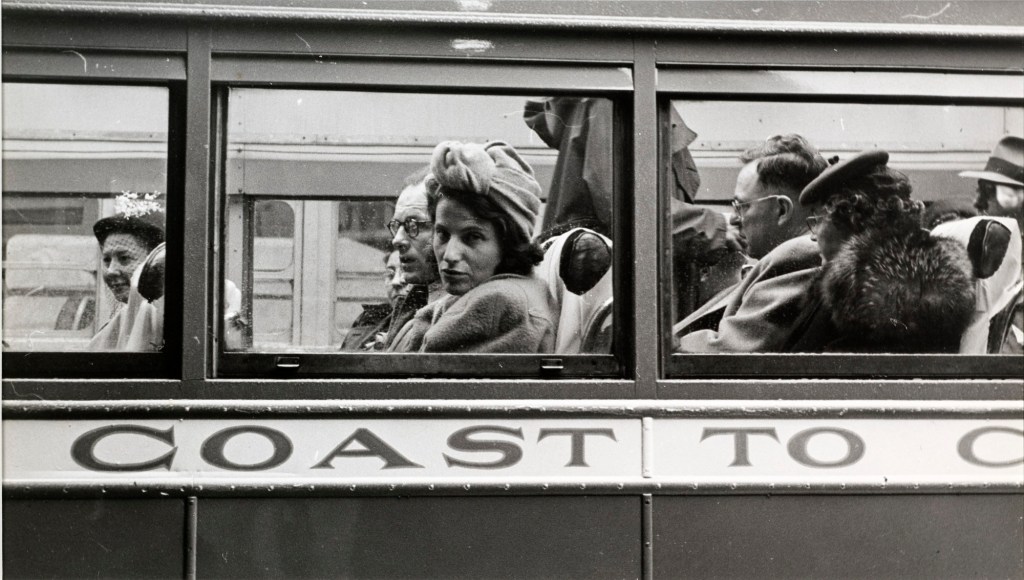
    The Megabus is always freezing. The frigid air conditioning strikes you as soon as you climb the top step. You shuffle sideways toward the back, and if you’re my height, you smack your head on the overhead bin before settling into your seat. A stranger makes their way down the narrow aisle, greeting you with, “Is this seat taken?” It’s not, except by your backpack, which you move between your feet. By the end of the next three hours, you will know this person as a priest knows a confessor. And they will know you. 

    You understand what I mean. Whether in planes, trains, or automobiles, we’re familiar with the serendipity of travel. Inside a metal giant, as you hurtle forward from one place to another, things take on a liminality. You doze, wake, look outside. If you’re going between Austin and Houston, endless dry plains roll past like waves. Time seems suspended, not quite real, and our personalities follow suit. Private people can become bolder, looser with words, readier to laugh. The stakes are just low enough that people will risk embarrassment. Oftentimes, it’s worth it.  

    In the end she’d probably marry, but her husband could never be as dear as this stranger met by chance … this man on a tram in the middle of a sealed-off city … it could never be this natural again.

    Love in a Fallen City, Zhang Ailing.


    Five minutes after I met her, Hiba presented me with a snack bag of vegan chocolate chip cookies. I munched gracelessly on each one, scattering crumbs, while she told me her logistics: eighteen, business freshman, two siblings. I returned my own mundanities, but as Austin fell away, there was nothing to do but pry. The Megabus shuddered like some hollow animal as we spilled our guts. Did you know Hiba comes from the Arabic word for gift? Her parents, though Pakistani, bestowed this on her. We laughed as we shared stories from childhood, pondered the similarities and differences between our Muslim families, and played at solving all the world’s problems through our discussion of literature, culture, youth, aliveness. We were a little council of two, strewn together haphazardly. The hours became shorter.

    In perpetuity, we see transportation as the site of encounters. In Tolstoy’s Anna Karenina, trains house rebellion, clandestine affairs, and life-altering tragedy. In the film Before Sunrise (1995), two faltering strangers stumble into love while on a train bound for Vienna. On page and screen, these meetings play out in constructed worlds parallel to ours. But an ensemble cast of travelers need not commit Murder on the Orient Express to breathe excitement into a travel narrative. Even as Buc-ee’s rolls past, we make it known that our everyday personal dramas exist, and, even more, they are worth being chronicled. In weaving this tessellated web of tales, we become characters in the others’ saga. Trapped in that uncanny bus, with the engine sputtering below, you can either read a story, or you can live one. 

    Traveling Companion (Mr. Ch. Deering), print by Anders Zorn

    Of course, conversation can’t always be easy. In the off-season, the bus is emptier, and people aim for single spaces. Even during holidays, when crammed in side-by-side, a simple activation of one’s AirPods is enough to nip introductions in the bud. I’ve been that person, too. Once, a friendly girl named Arya seemed eager to chat, but as soon as the journey began, I fell promptly into a deep, drooling sleep. And sometimes, the conversations just happen around you, as when two wise matriarchs discussed their darling grandchildren in the seats behind me, or when a couple guys my age solemnly theorized about an impending tech war with China. For three hours. 

    But Bao, from the start, seemed open. Out of all the people hogging window seats in solitude, I’m glad it was me he asked to share. Bao was used to journeys—not only had he traveled nearly an hour to the Megabus stop, but he had also moved to Texas from Vietnam before starting high school. I was practically an interrogator, hungry for details, desperate to know him. Quite generously, he seemed equally interested in my life. We were on the same wavelength: both entirely uncertain about our futures, but determined to meet it bravely. Both trying to worry less about the little things. We talked dramas, language acquisition, comfort food. As the bus slid to a halt, we hastily remembered to share contact info before deboarding. Months later, when I asked if I could write about him, he’d already beaten me to the punch. He had included me in a school essay about meeting new people. The marks we leave are mutual.

    As the travel expert Anthony Bourdain said, “One doesn’t take the A-train to Mecca.” There’s no shortcut for time and experience, and a three-hour bus ride can only scratch the surface. Incalculable knowledge is hidden behind the fact that you are, ostensibly, strangers. In this setting, it’s a heavy task to navigate artifice, nerves, and caution. But, those vegan chocolate chip cookies were real. Hiba’s laptop stickers were real. The million times I made poor Bao get up so I could use the restroom: that was real. Their laughs, and mine. Those were real too. 

    The circumstances have to be just right. People are exhausted, and sometimes you need to stare mindlessly out of a window, unbothered by everyone. Talking is harder than being silent. We’re awkward, jaded, and scared. But people will usually leap to meet you halfway, and I’m learning that bridging the disconnect is worth it, if you get the chance.

    We have so little of each other, now. So far from tribe and fire. Only these brief moments of exchange. What if they are the true dwelling of the holy, these fleeting temples we make together…

       “Small Kindnesses” by Danusha Lameris

    At the tail end of the ride, your legs feel like both Jell-O and plywood. You wobble and duck past your seatmate with your carry-on in tow. There’s a look shared, an understanding. For a few hours, those clothbound seats were sacred. You make vague promises to keep in touch, but you both know it probably won’t pan out. And it’s okay. As Bao and Hiba and Arya and the grandmothers and the tech-pocalypse forecasters and every other unnamable stranger filed out of the bus, friends and family were there to greet them. I smiled at people I’d never met before, but about whom I knew cherished details. I rejoiced in the kaleidoscope of things. I stretched my legs, and then I stepped forward into my own pair of waiting arms. 

  • Who Am I? A Choose Your Own Adventure

    By Kara Hildebrand

    A literary trope is something repeated so often it borders on cliché: the mad scientist, the forbidden romance, the antihero, the tragic backstory. Perhaps it’s just natural for certain repetitions to become cemented in our literary canon, or perhaps there’s something more to why we identify with tropes enough to reuse them. Characters are people we can latch onto, that we can know more intimately than even our own friends. Who they are and what they do matters to us, and the tropes that define the ones we’re drawn to are subtle ways through which we reveal our values and aspirations. We identify with characters we are like, and we identify with characters we want to be like. 

    And perhaps the best way to explore how we process our own identity through story tropes is through a story itself, one where your choices allow you to discover yourself along the way. Continue reading to find out which main character you are.

    Which Main Character Are You? 

    You are undergoing a test of sorts in a world as convoluted as the mind. There’s something… strange going on here. What could it be?
    And who are you? 

    You wake beneath scratchy sheets that smell of something gone sour. Do you know your name? 
    Yes… Go to A 
    No… Go to A 

    A. 
    You don’t recognize this bedroom. Everything is mahogany and frayed lace. Old furniture untouched by time; you skim the nightstand with your fingers and feel no nicks, no rust on the gold accents, and the drawer slides open with ease, though there’s nothing inside. You shimmy out of the covers, no sound but a 
    very
    distant 
    humming. 
    Your eyes catch on a timeworn vanity and a mirror etched with red letters. 

    Do you:
    Leave the bedroom to look for a way out… Go to B
    Investigate the mirror… Go to C

    B. 
    You roam through ceaseless, expansive corridors with nothing to guide you. Picture frames display plain white squares along every wall. Every few feet, a new frame. Something is close. Something else is just out of reach. You walk faster. You emerge into the foyer, a large door standing between you and something you can’t say. 
    The door won’t budge. 
    A wrinkled piece of parchment hangs in front of your face. 

    To Do: 
    X Go grocery shopping
    X Start to unpack boxes 
    O Remain in denial

    Do you check off the last item? 
    No, you head back to the bedroom… Go to C
    Yes … Go to D

    C. 
    Approaching the vanity, you glimpse yourself for the first time through red smears you now recognize as candle wax. The features looking back, uncanny and cobbled together, seem less like yours than this dollhouse furniture and more like a mimic copying your every gesture. Letters, muted and tacky, spell out:

    “How do 
    you 
    feel?”

    Like there’s a warmth blooming in my palms that builds with my confusion… Go to F
    Like I’ve been assigned to this fate, but by whom?… Go to E

    D. 
    You suddenly get the feeling that you’re being watched. You turn slowly around. Stone statues make up a semicircle around you, mouths slit into grimaces, each holding something in their hands. 

      A typewriter

    A guitar An open book

    A mixing palette A football

    What do you want to do next? 
    Weave through them and try to find another way out of here… Go to G
    There must be a reason I’m here, so I’ll go search for answers… Go to E

    E. 
    The humming
    Keeps getting louder as you walk 
    Keeps getting louder as you walk closer to the kitchen. 
    It’s coming from the fridge. The door creaks open. What you see doesn’t make sense. Letters stacked on letters, arranged like packaged food and cartons. 

    S  T  V  X  L  Y   L  Q E E
    L  J   R  E  P W  V   Q  S  L
    F  B  H  B  F  F  Y   D  O T
    L  U  H  O  N  E  S  T  U  I
    B  H  N  F  Y  T  D   T  T  K
    R  U  X  N  M N  U  B  G T
    A  M  C  H  Y U  K  C O A
    V  S  S  O  L  E  M  N  I  H
    E  H  H  Y  Q  U  K  I  N  D
    Z  Y  P  J   A  V  R  Z  G  A

    You pick up something that looks like a jug of milk 


    V
    E

    and take a sip. 

    How does it taste?
    Like sewage… Go to G
    Like strawberries…  Go to H

    F. 
    You stumble through doors, having to shove your shoulder against some to loosen them. Finally you wind up in a living room. It’s domestic, with couches and chairs adorned in a tacky orange flower pattern. There’s somebody in the chair. Their face is ashen and their eyes sunken in. They’re looking right at you. It’s you, you realize. Another version of you somehow. How do you know that? 
    “You’ve been following me.”
    “You’re in my house.”
    “But it’s my house too now, isn’t it?”
    “Yes, it is.” 
    Fear and frustration starts to pool in your palms and you feel a scream start to build in your throat. Hands burning, you open your mouth but before any sound can come out the other you soars across the room and into the wall. The heat subsides quickly like an exhale. 

    Are you seeing things?… Go to H
    Are you finally waking up?… Go to K

    G. 
    Suddenly, you notice footsteps in front of you. Hazy and not all the way there, like a mirage. You follow them through room after room, finding yourself in a bathroom. A figure stands in the corner. Their face is ashen and their eyes sunken in. They’re looking right at you. It’s you, you realize. Another version of you somehow. How do you know that?
    “You’re me, aren’t you?”
    “Yes.”
    “You’ve been following me.”
    “I have a message for you.”

    I knew that I was here for a reason… Go to J
    I have no idea what it could be… Go to I

    H.
    A vague awareness whispers in your ear, you can break out of here if only you try. 

    You concentrate, feeling a fire in your hands ignite… Go to K
    You hear a booming voice start to speak… Go to J

    I. The Everyman

    “You have a quest to undertake.”
    The other you hands over a key. 
    You feel unprepared but you’re ready, you make your way to the front door and unlock it. Your quest is clear now.

    “We are plain quiet folk and have no use for adventures. Nasty disturbing uncomfortable things! Make you late for dinner!”
    – J. R. R. Tolkien, The Hobbit

    How do we reconcile our normalcy with fantasies of adventure? Nebulous enough to be relatable, the Everyman is endlessly humble, adventure-averse, and oblivious to their own strengths. He is a wish we cling to that one day we can be pulled from this world, ordinary as we are, and be called to a higher purpose. We are not the subjects of prophecies, we have no birthright or heroic feats under our belt, and yet the Everyman, who is just like us, can be great. Our alignment with this character suggests, at its core, a poignant desire to matter, to explore what we see as heroic in our own lives. A grand quest may be as simple as running errands or raising a hand in class, but it can be heroic nonetheless.

    J. The Chosen One

    A voice crackles as if over a loudspeaker.
    “It’s you. We’ve been waiting for you.” 
    You find your way out of the house. You were meant to do so, after all. Your quest is clear now. 

    “yours is the light by which my spirit’s born:
    yours is the darkness of my soul’s return
    –you are my sun, my moon, and all my stars” 
    – E. E. Cummings

    The Chosen One is the recipient of our jealousy because we, too, want to be chosen. To be the subject of prophecies, to be completely integral to the future of our world; the dream of such a thing is addicting. Chosen Ones vary in their executions, but they all contain something rich and molten at their core: inherent value that is fated by the cosmos and can’t be erased or drained away. The Chosen One is the sun, the moon, and all the stars; when we absorb enough stories from their perspective, perhaps even a fragment of their self importance passes on to us. Through the Chosen One’s quest, we internally explore how we exert our own power and dare to see ourselves as the critical axis around which everything spins. 

    K. The Magician

    You make your way to the front door and feel the now familiar sensation dance across your palms. The door swings open into the outside world. Your quest is clear now. 

    “To be alive—is Power— 
    Existence—in itself—”
    – Emily Dickinson 

    The so-called “real world” with its gnashing teeth, she bites and we bite back. Magic is a perversion of the rules that govern our reality. The Earth doesn’t wield power over the Magician, the Magician wields power over the Earth. To imagine that we could manifest our intangible influence into something you can see, hear, touch is magnetic. The Magician can be many things: a child wrapped up in a fantastical world, a tortured woman simmering with untamed magic, a man with a long, white beard. Our obsession with magic represents an inner struggle for control, to take something from a world that takes so frequently from us.

    The End

    Here you are, the end of a journey and the beginning of another. As you go forward in the world, you’ll know what type of main character you are in your story. Identity is a puzzle that we never fully solve. We enter life and our mind for the first time with this daunting task of self discovery and we’re thrust into the physical world where this pressure never ends. Stories and tropes, however, give us shortcuts to learn more about ourselves, to provide comfort and stability in a world full of chaos. 

    So what do you think? Did I read you correctly?

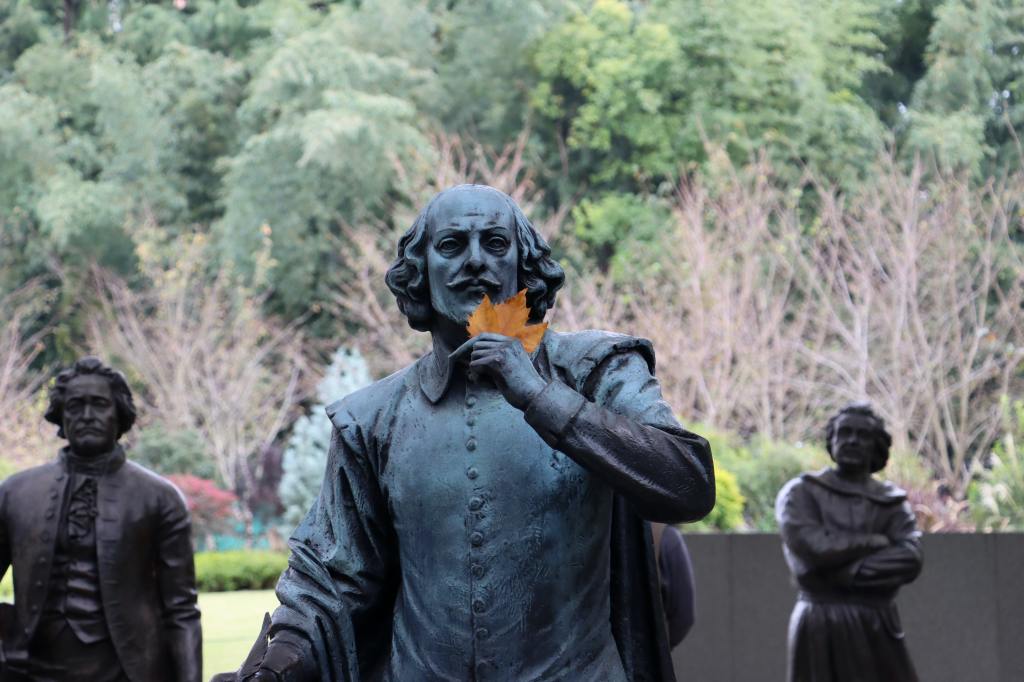
  • On the Timelessness and Accessibility of Shakespeare

    By Medha Anoo

    I have been taught Shakespeare’s work by instructors both in the United States and across the globe in India. He is a central figure in the Anglophone literature education of anybody, but the first time I remember getting excited about his work—really excited, like the way I felt when I pre-ordered Rick Riordan’s Blood of Olympus—was in my senior year of high school in AP Lit, when my teacher showed us the 2015 Royal Shakespeare Company (RSC) production of Othello directed by Iqbal Khan. In this famous tragedy, Othello, a Black general, overlooks his personal ensign, Iago, for a promotion; he also marries the white Desdemona. Betrayed, Iago manipulates the other characters in the play into Othello’s murdering Desdemona and then suicide after realizing what he has done. Khan is faithful to Shakespeare’s notoriously confusing Early Modern English, but he makes one significant, revolutionary alteration: he casts a Black actor as Iago. Suddenly, it didn’t matter to me that Shakespeare’s every third word was confusing. It didn’t matter that betrayal and murder-suicide and forbidden love are among the most overdone literary tropes. I became emotionally invested in the play. Shakespeare clicked.

    Faithful Shakespearean productions and adaptations each have their place, and while I’ve loved adaptations for as long as I can remember, blind casting was what made me fall in love with the faithful productions taught in school.

    Khan’s decision to cast a Black Iago is part of larger trends in contemporary theater to blind cast Shakespeare. You might be familiar with color-blind casting from Netflix’s Bridgerton, which, while being luridly entertaining, checks off so many problems with color-blind casting it’s almost comical. Blind casting applies similar principles of casting actors regardless of their age, race, ethnicity, size, gender expression, sexual orientation, disability status, neurodiversity, and religion. When theater directors blind cast Shakespeare productions, they often integrate the cast actors’ identities into the narrative, thereby enhancing a pre-existing narrative. Olivia Rutigliano writes the following on Joel Coen’s The Tragedy of Macbeth (2021), which integrates the actors into the characters of Macbeth and Lady Macbeth wonderfully:

    “The significance of casting Washington and McDormand, and the five acting Oscars they have between them, is major: Macbeth and his wife are long-respected in their community, esteemed and decorated.”

    For me, blind casting has the power to change a Shakespeare production from being faithful to an adaptation—a faithful Shakespeare production is one that retains its narratives, and an adaptation is one that emphasizes (or introduces!) particular narratives at the loss of others. The Tragedy of Macbeth (2021), for example, is an adaptation. Director Joel Coen highlights, above all else, lines which underscore the Macbeths’ childlessness and Lady Macbeth’s infertility; “rather than tell a story about hubris and power-hunger, [the film] locates a story of heartbroken parents and orphaned children.” My favorite adaptation is the 2013 Bollywood production Goliyon Ki Raasleela Ram-Leela, which is Sanjay Leela Bhansali’s take on Romeo and Juliet if Romeo (Ram) and Juliet (Leela) were heirs to rival gun-running Gujarati mafias.

    Faithful Shakespearean productions and adaptations each have their place, and while I’ve loved adaptations for as long as I can remember, blind casting was what made me fall in love with the faithful productions taught in school. Khan’s Black Iago (he retains a Black Othello and white Desdemona) radically changes the racial dynamics in Othello. and brings new depth to the character and the conflict/relationship between Othello and Iago:

    “…it addresses the character of Iago in a very different way, I think. Because suddenly, it heightens—for me anyway—the sense of betrayal. The sense of broken trust, the sense that you and I—as [Iago] says right at the beginning to Roderigo—we have fought in Rhodes, in Cyprus, on others’ grounds, Christian and heathen, we’ve seen war together, you and I, we are brothers. We’ve done it all together. But you went and chose that [white] guy over me.”
    —Lucian Msamati (Iago), interviewed by Sabo Kpade

    Color-blind casting is a longstanding tradition on the stage. Matt Wolf explains that as performers of color have been playing historically white roles in London theaters for years, their audience has seen themselves represented in Anglophone literary canon. Shakespeare’s intent was to write for his audience as well. His plays were for the 16th c. working class—which included Black and brown people—the middle class, the upper echelons of society, and Queen Elizabeth I of England. Some of Shakespeare’s audience was illiterate—he himself left schooling at age 14—others were fluent in three or more languages. His plays deal with the profound questions of human existence while brimming with phallic jokes and theatrical displays of machismo—not unlike the kind you’ll find in a high school cafeteria at lunchtime. Shakespeare has written something for everyone in the vast expanse of his audience. 

    Blind casting can return us to a Shakespeare that was written for us.

    His work has been lauded as timeless by many (including every single one of my literature instructors, and I have gone through 10), but it has not been accessible for a very long time. Who has the time and energy to painstakingly translate Shakespeare’s Early Modern English themselves? How many people don’t live in affluent school districts that can hire instructors with experience teaching Shakespeare? Given how pervasive he is in the instruction of Anglophone literature, his work should be done justice, if only to prevent boredom in the classroom. It is therefore necessary that 21st-century Shakespearean productions are performed for its audience.

    Blind casting can return us to a Shakespeare that was written for us. Color-blind casting is not new, but blind casting without regard to disability status and neurodiversity is a burgeoning idea in theater. I recently watched Hamlet (2018), performed at the Shakespeare Globe. Michelle Terry directs and stars as Hamlet, a grieving Danish prince. Hamlet is driven mad by the spectre of his murdered father, whose ghost orders him to avenge him by killing Claudius, Hamlet’s uncle who has married the Ghost King’s wife and usurped the throne. Nadia Nadarajah, a Deaf actor, plays Guildenstern, and her Deafness is integrated into the play.

    At their introduction, Rosencrantz and Guildenstern stand in a closed triad with Hamlet, and the three of them communicate freely and openly in British Sign Language (BSL). No one interprets Guildenstern, so at times the audience is also blocked from understanding the three, like a family conversing with each other in a language only they know. Hamlet’s, Rosencrantz’s, and Guildenstern’s intimacy and companionship with each other are underscored relative to Claudius’ treatment of Guildenstern—Claudius misuses sign language, speaks over Guildenstern, and at one point dismisses him entirely. As the play progresses, Claudius recruits Rosencrantz and Guildenstern to ship Hamlet off to England. In their last interaction as a triad, Hamlet stops signing entirely, so hurt by his friend’s betrayal he effectively refuses to acknowledge him anymore.

    Among other things, Hamlet is about grief. Terry’s blind cast centers this narrative. The loss of his father sinks him into a deep depression. Over the course of the play, the remaining people in his life for whom he cares abandon him as well—his mother by marrying his uncle so quickly, and Rosencrantz and Guildenstern for turning their backs on him. Blind casting Nadarajah as Guildenstern and integrating Deafness into the production enhances this narrative, emphasizing that by the end of the play, Hamlet is well and truly alone. The people he loves have either died or betrayed him.

    The integration of Deafness into Hamlet suggests a production that is conscious of its audience—at the most basic level, representing Deaf and Hard-of-hearing (HoH) individuals and acknowledging their presence in society. It goes further by spotlighting Hamlet’s pain and isolation, cutting through the dense prose of Early Modern English and facilitating empathy for Hamlet—which may have not been possible had the audience not known of the depths of Hamlet’s trust in his friends and his hurt at their betrayal. The audience’s empathy for Hamlet represents a zenith of accessibility to Shakespeare, and it was made possible, at least in part,  by blind casting Guildenstern’s character.

    O God, God!
    How weary, stale, flat, and unprofitable
    Seem to me all the uses of this world!
    Fie on ’t, ah fie!

    —Hamlet, Hamlet Act I Scene II, 136-139

    The use of blind casting in The Globe’s Hamlet (2018) also, however, has cost the play one of its central motifs, which is why I consider it an adaptation rather than a faithful production. Ophelia is played by Shubham Saraf, a male actor. This revolutionized blind casting, not Shakespeare production. While it has become somewhat normalized to cast feminine-presenting actors in male roles—Michelle Terry as Hamlet and Catrin Aaron as Horatio, for example—Saraf as Ophelia surprised me. 

    It becomes apparent as we read Shakespeare that the bigotry of his time is alarmingly relevant to the bigotry of our time, and vice versa. Timelessness goes both ways.

    Shakespeare’s weak female characters are well-documented; in Hamlet (2018) specifically, blind casting a man as Ophelia ignores the rampant misogyny and (lack of) female agency in the original work. In Shakespeare’s version, Hamlet is verbally violent—even degrading—towards Ophelia. Gertrude, his mother, is written to be easily manipulated. In her adaptation, Terry’s Hamlet is also physically violent with Ophelia and Gertrude, the only two canonically female characters in the play. Neither Gertrude nor Ophelia have any agency in the play; Gertrude serves as a plot device to support Hamlet’s isolation, and Ophelia is swayed, and sometimes outright controlled, by Claudius and her father, Polonius. Furthermore, despite Hamlet’s documented declarations of love for Ophelia, she is insignificant to him in his grief-fueled madness—her kindness and concern for Hamlet are forcefully rejected, as would her hypothetical betrayal have been nonchalantly dismissed—because she is never truly a person with worth to him. Being a woman in Hamlet, Ophelia is doomed from the beginning to be unimportant—like Hamlet’s mother, Gertrude, existing only to further the narrative—making her attempts to love Hamlet all the more heartbreaking. Saraf is gut-wrenching in his portrayal of Ophelia’s drowning, but at the cost of Shakespeare’s female narrative. 

    Hamlet (2018) is a Shakespearean adaptation for the contemporary audience. It’s great achievement is accessibility; blind casting a Deaf actor meant that everyone, regardless of wealth or education, could understand the story. However, Hamlet (2018) is not the production that should be a person’s introduction to Shakespeare’s works, nor should it be used in classrooms to teach Shakespeare’s Hamlet. Anyone’s first contact with Shakespeare—especially if they are likely to engage with Anglophone literature for years thereafter—must be faithful to both the source material’s profundity and bigotry. (In my opinion, Othello (2015) accomplishes this task while being relevant to its contemporary audience.) It becomes apparent as we read Shakespeare that the bigotry of his time is alarmingly relevant to the bigotry of our time, and vice versa. Timelessness goes both ways.

    Consider The Comedy of Errors. Syracusan Antipholus and his slave companion, Dromio, are separated from their identical twin brothers, who are, confusingly, also named Antipholus and Dromio. Eighteen years later, the Syracusan pair travel to Ephesus, where Syracusan merchants are banned from entrance, to look for their brothers. Shenanigans ensue.

    The Comedy of Errors is a funny play—and also serves as important commentary on the state of immigration in the 21st century, especially how racialized and politicized an issue it has become. In his essay, “Shakespeare, Marlowe, and the Stranger Crisis of the Early 1590s,” Eric Griffin writes, “If crown policy advertised public welcome, popular attitudes towards London’s growing immigrant community…oscillat[ed] between sympathetic identification and outright contempt…citizens were discomfited by the presence of ‘strangers’ in their midst.” Griffin also quotes Lien Bich Luu to contextualize that that period in London history was characterized by “severe inflation, unemployment, plague epidemics, [and] disruptions in trade and war”—eerily similar to 21st-century COVID-onset inflation, unemployment, and supply chain disruptions. While the pandemic has contributed to the rise of anti-Asian hate, Asians in the United States have long dealt with the dichotomy between the model minority myth and Asian fetishization. The following is an excerpt from The Comedy of Errors, where Antipholus and Dromio of Syracuse comment on the body of Nell, an Ephesian kitchen maid, while also reflecting English sentiment regarding various countries:

    ANTIPHOLUS OF SYRACUSE
    [In what part of her body stands]…France?

    DROMIO OF SYRACUSE
    In her forehead, arm’d and
    reverted, making war against her heir.

    The Comedy of Errors Act III Scene II, 142-144

    Of course, it is not a direct parallel. Syracusan Antipholus and Dromio are not commenting on the body of an Ephesian-born woman in Syracuse whom they consider to be a foreigner, but their misogynistic, generalizing comments on Nell’s physically unappealing body reveal patterns of thinking that also abound today: “Of course her forehead is large and her hairline is receding! It is French, the country which is known for overweight monarchs and weak heirs!” recalls the crass harassment Asian women, whose bodies are sexualized from stereotypes due to employment in domestic and care work, service industry, and the sex industry, might face walking home. 

    Immigration is central in Shakespeare’s works. The Comedy of Errors is thought to be his first play, and works including Sir Thomas More, Henry VI, Titus Andronicus, The Merchant of Venice, and Othello all play on English disquietude regarding immigrant presence—the latter two plays demonstrate an outright hostility towards Jewish and Black immigrants. This is not to argue that Shakespeare was xenophobic, but rather a playwright with keen business acumen who knew that capitalizing on anti-immigrant sentiment was likely to make him more money. A responsible teaching of any of these works includes a discussion on immigration circa Elizabethan England versus the 21st century, including questioning exactly why Ephesus and Syracuse are such bitter rivals. However, this discussion is not accessible outside of academic institutions, but its nuances can be communicated to a wide-ranging audience by blind casting the play. 

    Blind casting makes Shakespeare’s original work more accessible to a contemporary audience simply because we can see ourselves in it.

    The Comedy of Errors is frequently cited as a play dealing with issues of race and identity. Blind casting creates the possibility of casting actors of Turkish descent as Antipholus and Dromio of Ephesus, paralleling present-day questions of race, identity, and the assimilation of Germans with Turkish ancestry. The two sets of twins are separated in a shipwreck—what if the actors cast in their role were Cuban or Haitian boat people? Consider casting Antipholus and Dromio with Americans who have Syrian ancestry, or even Irish. A single, faithfully blind-casted production has the potential to comment on the assimilation of Syrian refugees in America and be simultaneously accessible to someone deeply entwined with geopolitical conflict and the ten-year-old Syrian child separated from its family.

    Thirty-three years have I but gone in travail
    Of you, my sons, and till this present hour
    My heavy burden ne’er deliverèd.—
    The Duke, my husband, and my children both,
    And you, the calendars of their nativity,
    Go to a gossips’ feast, and go with me.
    After so long grief, such nativity!

    —Emilia, The Comedy of Errors Act V Scene I, 413-419

    It comes down to this: Shakespeare is a foundation of Anglophone literature. I remember memorizing a monologue from The Merchant of Venice as an 11-year-old for an assignment—across the world in India. Our Macbeth unit included a classroom table-read (I played Macduff because I liked being loud). During our Romeo and Juliet unit, after I moved to the United States, we watched Baz Luhrmann’s 1996 adaptation complete with loud hollering at Leonardo di Caprio’s first appearance. I plan to watch The Tragedy of Macbeth (2021) as soon as I can, because reading Rutigliano’s review on it got me really excited. 

    Blind casting makes Shakespeare’s original work more accessible to a contemporary audience simply because we can see ourselves in it. It helps us look through confusing Early Modern English to the heart of his work: the grief, the joy, the politics, the love, the comedy, and the tragedy. It augments the timelessness of his work, and it underscores the relevance of his work to our present lives.

    Blind casting brings Shakespeare back to its roots: a theater of people from all walks of life—the Globe. It is the great unifier of Shakespeare, allowing the doctoral candidate writing their dissertation on Ophelia’s characterization to thrill in his work just as much as the working mother who speaks English as a second language. That’s the magic of it.

  • On Seagulls and Self-Respect

    by Gerardo Garcia

    I was on the phone one night with someone I knew I wouldn’t marry, and as she hastily came up with a reason to hang up, I realized I had lost myself. I had been suppressing the urge to throw myself at her feet; every third thought was her. I was also taking Shakespeare that semester and in my early modern romanticization of love, I welcomed the baseless daydreams as I pined and devoted myself to another.

    Whenever I read a comedy with unrequited love, or mispaired lovers, I turn to reflection. The yearning, though ridiculous, is also all too familiar and my sympathies usually lie with the unrequited. I find it tragic to not receive the affection one gives, to suffer the humiliation of rejection, to elicit the disgust of the person one loves, and to absurdly continue loving in return; but now I know the real tragedy is one’s misplaced self-respect.

    It is exhilarating to be in love, and like a flattering mirror in a well lit room, to be loved in return makes it easier, obvious even, to see one’s own self-worth. However, with the thousands of hours spent in intrinsic solitude, living alone in one’s mind and body, in the absence of love and the sobriety of reality—what would become of us without self-respect?

    [TREPLEV comes in without a hat on, carrying a gun and a dead seagull.]

    “Self-respect: Its Source, Its Power,” was first published in Vogue in 1961. The essay was later republished as “On Self-Respect” in Joan Didion’s 1968 collection, Slouching Towards Bethlehem. In it, she explores self-respect in terms of the seemingly trivial to the crushingly irrevocable; she shares with us personal experiences of vulnerability, defining self-respect by deconstructing aspects of not only herself, but human nature in general. Didion argues that without introspection, an awareness of self—warts and all—we cannot begin to come to terms with who and what we are. Try as we might, she continues, it is impossible to deceive oneself, to delude ourselves with the same tactics we employ on others. Whether or not we can stand to live with ourselves then depends, of course, on whether or not we respect ourselves.

    TREPLEV: Personally I am nothing, nobody. I pulled through my third year at college by the skin of my teeth, as they say…When the celebrities that frequent my mother’s drawing-room deign to notice me at all, I know they only look at me to measure my insignificance; I read their thoughts, and suffer from humiliation.

    Throughout the essay, Didion also represses the desire to acknowledge romantic love, yet it anxiously seeps into her writing, referred to exclusively in subordinate clauses, secondary, but still looming over us. She does not offer dating advice. Instead, she tries to get us to understand that which governs all forms of love: 

    To have that sense of one’s intrinsic worth which, for better or for worse, constitutes self-respect, is potentially to have everything: the ability to discriminate, to love and to remain indifferent. To lack it is to be locked within oneself, paradoxically incapable of either love or indifference.

    Without it, she continues, our self-image is blurred; we find ourselves doubtful of our identity, unsure of who we are as we eagerly allow ourselves to be cast into any role demanded or expected of us. Of course I will play Silvius to your Pheobe, Ophelia to anyone’s Hamlet: “no exception is too misplaced, no role too ludicrous.”

    TREPLEV: How well I can understand your feelings! And that understanding is to me like a dagger in the brain. May it be accursed, together with my stupidity, which sucks my life-blood like a snake! [He sees TRIGORIN, who approaches reading a book] There comes real genius, striding along like another Hamlet, and with a book, too. [Mockingly] “Words, words, words.” You feel the warmth of that sun already, you smile, your eyes melt and glow liquid in its rays. I shall not disturb you. [He goes out.]

    “At the mercy of those we cannot but hold in contempt,” unrequited love is a kind of human sacrifice. Like Dante, one offers themselves up entirely in religious devotion to the other. The object of affection is idealized, mythologized, while interactions with them are completely one-sided, painful, often humiliating (running into Dante on the street one day, Beatrice greeted him causing him to become visibly ill, and flee without saying a word). It is unglamorous, pathetic, and something to be suffered in silence among the public haunt of men, in banal social settings, be it school or the virtual landscape of an ex’s Instagram page. Now especially, unrequited love is unromantic, off-putting, potentially cringeworthy. It is ultimately something to be endured or dispassionately and pragmatically “torn out by the roots,” and a sign of someone that cannot possibly respect themselves.

    The Seagull brings this agony to the stage. Confessions of love are shushed, dismissed as mere nonsense, appreciated, but not returned. Vacationing on Pyotr Sorin’s estate, isolated in the country, characters are in the constant presence of each other’s company where, bound by social propriety, they are unable to express their suffering as they witness unbearable displays of misplaced affection. There are ten guests at the estate—six are in love with another who does not love them back. The action in the first three acts takes place over the course of several weeks while the final act takes place two years later where we observe how each lover has endured their grief in the face of reality as they return to the estate.

    It is also a comedy. 

    The play does not romanticize unrequited love—it is a funny valentine ridiculed with surmounting bleakness. Characters are inevitably forced to endure reality; in the face of modernity, love is complicated, corrupted, no longer purely romantic. Chekhov’s cheeky subtitle, “A Comedy In Four Acts”, reminds us of the absurdity at the forefront of it all: to lack self-respect and to love those who do not love us back, who are cruel in return even, and to know it.

    I’m a seagull. No, that's not it…

    There is for instance, Nina, the aspiring young actress who is taken advantage of by the acclaimed writer Boris Trigorin. Knowing that he is romantically involved with Treplev’s mother, she is still bound by what Didion refers to as the “compulsiuon to please,” a submission of self to the demands of others and apparent “evidence of our willingness to give”. Nina plays into Trigorin’s fantasy, casting herself in his fetishization of innocence—youthful, pure, submissive, naive, a subordinate in nature better left undisturbed, but ultimately meant to be conquered and destroyed—with complete disregard for herself. This type of unrequited love is one we see again in the play between Medevenko, the schoolmaster, and Masha, the steward’s daughter (she agrees to marry him out of practicality, since Treplev will never love her): it is the delusion of love, artificially returned but truly withheld, and an inherent rejection of the knowledge of what one deserves. At the heart of the play however, is Treplev and his seagull.

    [TREPLEV lays the sea-gull at her feet.]

    Treplev gives Nina a dead seagull as a grotesque symbol of his love. It is a confession that cannot be dismissed by either vodka or snuff. This seagull becomes an elusive presence throughout the remainder of the play as characters reference the bird, or attempt to discern the meaning of the bizarre gesture.

    NINA: This seagull I suppose is another symbol but forgive me I don’t seem to understand
    
    TRIGORIN: Nothing much, only an idea that occurred to me. [He puts the book back in his pocket] An idea for a short story. A young girl grows up on the shores of a lake, as you have. She loves the lake as the gulls do, and is as happy and free as they. But a man sees her who chances to come that way, and he destroys her out of idleness, as this gull here has been destroyed.
    
    SHAMRAYV: Here is the stuffed sea-gull I was telling you about. [He takes the sea-gull out of the cupboard] You told me to have it done.
    
    TRIGORIN: [looking at the bird] I don’t remember a thing about it, not a thing. [A shot is heard. Every one jumps.]

    The seagull comes to mean freedom, youth, and beauty, undisturbed—an identity that Nina clings to in the final act—but it is also a symbol of Treplev’s maimed self-respect, offered as devotion when it is really blood tribute. In two years time, Treplev becomes a published writer yet is still unhappy and what little self-respect he has left to preserve himself, is still something to be offered up and maimed. It is Didion’s final turn of the screw: he has projected his identity and self-fulfillment onto Nina. Without her, he cannot stand his writing, cannot stand to live with himself, alone, and in the final moments of the play, shoots himself off stage with the Chekhovian rifle of Act II: “one runs away to find oneself, and finds no one at home.”

    [The curtain falls.]

    And I, too, have lain seagulls at the feet of another. I have given myself up to unmoving parties, blank and pitiless as the sun—and, in my recent stint with self-respect, like many before me, I read and reread Didion’s sobering words, thinking back on all those lovers, and Treplev’s tragedy of loving absurd. Unrequited love is an uncanny valley. It bears a human likeness, but it is a stark and barren country where writers like Chekhov and Didion are born. From their stony sleep they seem to tell us, that while we can’t help who we fall in love with, no misery is greater than loathing oneself.

  • Tell Me Something I Don’t Know: In Defense of Gossip

    Harmony Moura Burk

    Every Sunday, three old women gather in the kitchen, chattering about the latest church scandal. They’ve turned it into a ritual over the years, laying out secrets like they layout tea sets and cakes. Their mothers did the same thing, and their grandmothers, and their great grandmothers. The table is set, the shawls are gathered around their shoulders, and their old faces shine with mirth with every piece of information. For them, it’s as intricate a ritual as Holy Mass. 

    Humans are incapable of minding their own business. Gossip, fofoca, chisme, tea—it doesn’t matter what you call it, we revel in our ability to trade secrets all the same. In fact, we seek it out constantly. It’s appealing to spill someone else’s beans. Our desire for gossip is ancient, dating to the Bible, the Ancient Greeks, and beyond. Despite social stigma (the Pope himself recently begged hairdressers to stop spilling tea), we still pursue conversations founded upon talking about someone else. It’s fun, even if some people would rather not admit it. More importantly, however, it is key to the stories we use to relate to each other and to ourselves. 

    Screencap from In the Heights (2021) dir. Jon M. Chu

    “¡Gorgeous! ¡Linda! Tell me something I don’t know.”

    No me Diga, Lin Manuel-Miranda

    Just as oral traditions and folklore stories are an integral part of cultural experiences, gossip is more than just a social bonding activity. Because of gossip’s ties to community, relationships, and the passage of news through unconventional mediums, it generates a unique sense of unity by allowing participants to interact with stories that arise from within their communities. I grew up listening to my Brazilian aunts eagerly sharing the information they’d acquired about the family (and that outside of it) as a way of bonding. Every phone call, visit or party was incomplete without updates or inquiring about others. Fofoca, the Portuguese word for gossip, flowed freely. Trips to the local hair salon meant listening to news about the regulars and others around the city, and my mom often encountered people in the street asking about her family ties who had heard of her through one story or another. The cultural role of fofoca, or chisme as it is called in Spanish, in Latiné communities cannot be understated. Communities, especially isolated, tight-knit groups, join together under this unique form of storytelling. Families use it to reinforce relationships and propagate individual histories. In a world of renowned authors, directors, and ancient generational stories, gossip destroys the idea that you need some great artistic talent to tell stories. Anyone can construct a narrative, embellish it here and there to set the scene and move the audience with their words and make everyday events and drama as attention-grabbing as a play by Shakespeare or Ibsen. The fact that truth isn’t always a prerequisite—rather, the tale just has to be entertaining and believable enough—draws similarities to genres like magical realism, historical fiction, and contemporary literature such as the works of Sally Rooney and Ottessa Moshfegh. It doesn’t matter whether or not these things actually happened, just that they might have happened, or sort of happened. 

    Two essential components make it such that gossip, unlike any other form of storytelling, is a communal work. First, gossip without an audience is just writing or conspiracy. Another listener, if no one else, must be present—otherwise, who are you gossiping to? The fun of gossip lies in sharing. Second, there is rarely just one author to the story; each individual listener is often encouraged to add on or at least to provide reactions. Thus, particularly in Hispanic and Latiné communities, the art of fofoca demands a sense of fun and casual connection, inviting other “authors” to take part and revel in the tales they can spin. The spaces in which gossip promulgates, predominantly occupied or at least spread by women, become cultural hubs. Individual expression gives rise to creative outlets which spread local news through the grapevine, allowing for unconventional means of sharing information. This can increase communal unity as well as strengthen bonds between individual members. A place where local stories which may have otherwise never been known are thus freely circulated and appreciated in their purest form. 

    Students slip into a bathroom stall to smoke and gossip, secrets, and throw names into the air as freely as the smell of cigarettes. Who’s dating, who got dumped, who was caught drinking at last night’s party, who tried to vandalize someone else’s property—everyone’s business and no one’s. They know all the answers and all the questions. Nothing is sacred, no topic off-limits. Gossip is just another part of their daily routine, sandwiched right between calc and study sessions. None of them care, all of them hang on every word. The thrill of airing out someone else’s dirty laundry is as addicting as the nicotine. 

    Artwork by Pieter Brueghel the Younger (1564–1638)

    “Did you hear that Catherine caught the plague again?”

    A medieval woman, probably

    Like other stories, gossip typically follows a plot structure, albeit unconventionally. You have your beginning (usually along the lines of “I heard…” or “did you know…”); your rising action (“and then she told me—”); your climax (“No! You’re kidding, right?”); your falling action (and then I said—”) and your resolution (“well I heard—”). You have your colorful cast of characters, your drama, your plot twists—the only difference is that instead of a page or a screen, the medium of gossip is intimacy. Intimacy between friends, between family, between strangers in a hair salon—gossip strengthens human bonds and intrapersonal communities because it brings people close. No one’s family is more united than when they’re collectively airing that one uncle’s dirty laundry over Thanksgiving dinner. Gossip has been around for ages, prevalent even among Medieval peasants. For them, it strengthened village connections and spread news while also serving as a unique way to circumvent authorized (and often censored) forms of communication. There is a certain danger to gossip, much like that present in satire and forms of literature that act as political allegory and commentary, but unlike written mediums, the stories told through gossip are not bound to a pen and paper. Thus, they flow far more freely—anyone can engage with it and anyone can spread it as long as there are people to speak and interest in the business of others.

    Furthermore, the act of gossiping demands a level of creativity—it isn’t enough to just tell people that Carla from down the street has a secret husband or that a mutual friend drunk called her ex for the 14th time, you need to build tension. Half the fun is found in generating suspense, some of the best stories are those which turn an ordinary event into something worthy of Austen or Woolf. No one wants to hear about how someone spilled detergent in the laundromat, but turn it into a story of mortification, struggle, and chaos and you’ll have an audience. That is the appeal of gossip—the transformation of the ordinary into the remarkable. 

    Your aunt pulls you to the side during a party, enthusiastically informing you about the trouble her sisters have gotten into. She told you this story before, but now she has additional information from your uncle, your brother, your mom. You happily give her more pieces to the puzzle, she reacts as if you’re sharing the winning numbers to the lottery. The music blaring in the background is just loud enough that no one else can hear her. There isn’t malice in her tone, she just wants to know, hungering for more and more people to share her experiences with her.

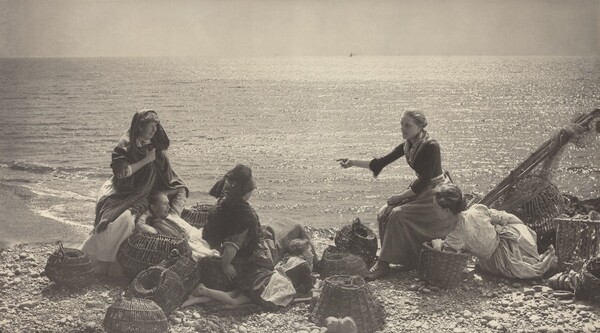
    Gossip on the Beach – Henry Peach Robinson c.1885

    “If you haven’t got anything nice to say about anybody, come sit next to me.”

    ― Alice Roosevelt Longworth

    Because gossip involves characters known to the listeners, it constantly evolves. Each time the story is retold to a different set of listeners (regardless of whether or not the original audience is present) the altered set of reactions transforms the experience. It becomes personal, particularly when gossip encourages further storytelling. In this way, it’s unique. Unlike other mediums, which tell their stories in a self-contained fashion, gossip directly encourages more gossip. It’s a more direct version of the pipeline that spawns fanfic and other books from great works of literature—gossip flows freely and feeds a human urge to hear and tell more. One train of thought follows another, developing a complex system of mental railways composed of individual and group experiences. Part of this is a human tendency towards competition. The one with the most sensational account, the juiciest piece of information, tends to receive recognition. Other aspects suggest another reason why gossip almost always leads to more gossip: connection. Entertainment, a desire to be understood and to vent your experiences and frustrations, interest in hearing what someone may or may not have to say…all of these enforce the appeal of inviting someone to sit next to you and divulge their own arsenal of secret information. Even when gossip and its subject matters are recognized as potentially immoral or harmful, there is still a desire to indulge in it, violating the sanctity of privacy for the sake of intimacy and connection with another person. Often, the blurred line between gossip and slander is treated no differently than a problematic piece of literature or an intentionally disruptive play. Stories do not always have to be pleasant, they simply have to tell and engage. To the gossiper, even negative feedback is welcomed—you still get to tell your story and perhaps even discover its legitimacy or additional, related information in the process. 

    As soon as you step out of the room you reach for your phone, rapidly typing in every group chat you’re in. It’s the same message, a frenzied series of texts relating every detail of the horrible things your boss said to another employee while you left work. It doesn’t matter if you misheard a few details, it was important and interesting and confusing enough. The flood of notifications that follow only serves to boost your satisfaction, the social media posts that follow spreading the word. Your coworkers follow suit, the story morphing and restructuring itself relentlessly each time it’s retold—your boss resigns within a week.

    Women walking their babies carriages and gossiping in the park – Cornell Capa, 1951-02

    “I never gossip. I observe. And then relay my observations to practically everyone.”

    ― Gail Carriger, Timeless

    Despite what critics of the habit may say, gossip is uniquely equipped for addressing social issues and expression. As a free-flowing medium, it is one of the hardest forms of storytelling to silence. Almost anything slips through the cracks and maybe heard through the grapevine, even when those involved don’t want it to. There’s a reason why the rumor mill is so infamous in popular culture and why matters of reputation have concerned humanity for ages. Once the fire starts, it doesn’t stop. Nor would anyone perpetuating it want to stop. Gossip allows people a unique form of self-expression in which they can freely demonstrate their thoughts and opinions of others in narrative form. More so than other forms of storytelling, gossip is informed by the speaker’s perspective. It is, thus, often told by an unreliable narrator (you could imagine the whole plot of The Great Gatsby as being one giant attempt at gossip by Nick Carraway without changing a single aspect of the book), especially if this is the third or fourth retelling. This unreliability is tinged with the speaker’s emotions and desires, changing shape according to how much information they chose to add as well as their own personal narrative style. Gossip hints at the nature of one’s perception even when it isn’t stated outright. Narrative voice, distribution of plot elements, characterization, and tone all change from gossiper to gossiper for the same reasons they change between writers. The only difference is that instead of written words, gossip is spoken. Listening to gossip informs individuals of the speaker’s connections to the social circles around them and may influence one’s own narrative style; telling gossip allows the speaker to develop their own storytelling voice. That is why people willingly go out of their way to listen.

    “Enter RUMOUR, painted full of tongues.”

    William Shakespeare, Henry IV, Part 2

    We are hardwired into a fascination with intimate drama—those dirty little secrets and haunting memories that structure the lives and actions of everyday people. We thrive off our desire to discover intricate webs of secrecy and watch them play out. To see and be seen. That’s why we sit and listen to the same story told over and over again just to see a new person’s reaction. That’s why we become invested in family scandals and high school dramas. The old women chattering in the kitchen, the students throwing around secrets, the aunt oversharing every detail…these are building blocks for the stories we share and thrive on. While novels, plays, and poetry may be the full-course meals of stories and intricate plots, gossip forms the bread and butter of storytelling. The narratives we engage with and build every day. The group chat, the tea parlor, the stall, the bedroom, and the private Twitter feed… are no less important places of authorial creation than the writing room and the typewriter. Through them, and stories of the quotidian, we appreciate narratives embedded in the normal parts of our lives. The stories of our families, our friends, our acquaintances, our coworkers, the strangers on the street, and the odd fellow you met at 7 am in H.E.B. by complete chance—these stories don’t need to be published or immortalized in print to be shared and cherished. All they need is a desire to be told, and a listening ear. 

  • Hothouse Writers’ Wintertime Literary Escapes

    We asked our website writers what their favorite way to curl up with a book is and for any titles that sparked that cozy-warm-holiday-feeling we all know and love. Read below for some ideal wintery-reading-respites and have a very merry holiday season!

    Stephanie Pickrell

    My grandmother’s house no longer exists as I remember it, but I remember what it felt like to read there. I would wake up far too early in the mornings, made restless by the different time zones, and creep downstairs to the couch by the window. Snow outside and warmth inside made the whole world quiet.

    Unfortunately, of course, I can’t exactly recreate the experience in Houston, Texas, but a mug of spiced drink in my hand goes a long way. This winter, I’ve stacked up a sizable stack of books to read, mostly tales from long ago: the Contes de Fées of Madame D’Aulnoy, the Lais of Marie de France, and fairy tale retellings by Angela Carter. Perhaps I’ll even wake up too early in the mornings once again.

    Megan Snopik

    My favorite reading method involves a park bench, a fiction novel, and a revolving backdrop of dog-walkers, stroller-pushers, and trail-runners. Looking at the stagnant text while the people, all existing in their own worlds, pass by, is such a relaxing way to devour whatever book that’s been sitting on my nightstand. This winter break I’m looking forward to reading, The Idiot by Fyodor Dostoevsky, unrelated in all but title, The Idiot by Elif Batuman, and Flush by Virginia Woolf.

    Lana Haffar

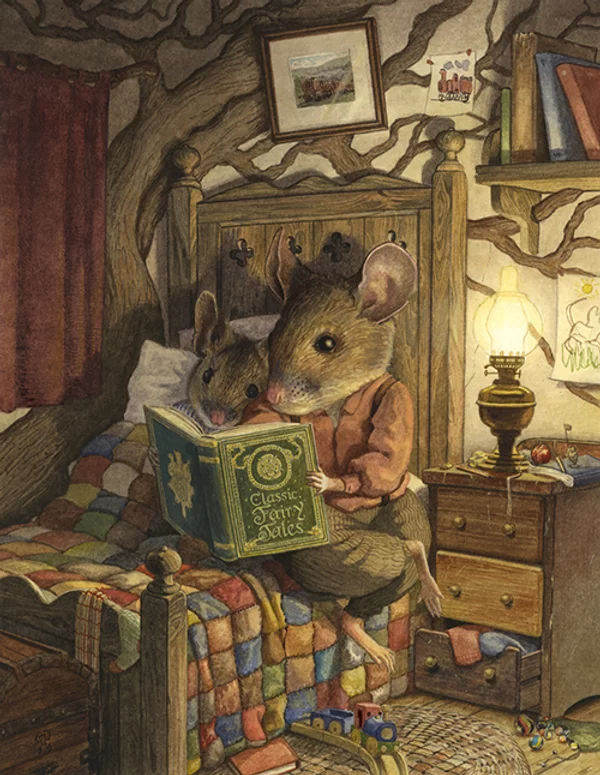
    Somebody revive me when they invent the shrink ray because I vow to one day live in a storybook. Once I’m five inches tall, I’ll make a little bowl of cinnamon oatmeal, get under my tiny quilt, and let my miniature lamp illuminate the room with soft light. As a kid, the anthropomorphic animal friends in The Wind in the Willows and The Tale of Peter Rabbit were the epitomai of comfort. 

    In honor of revisiting childhood, I can’t wait to settle down this winter with old favorites like The Borrowers, The Phantom Tollbooth, and A Wrinkle in Time. Every night, my mother and I would tuck into bed and immerse ourselves in these stories. In those moments, the big bad world is outside, you are warm, and things look just a little brighter.

    Gerardo Garcia

    My grandmother’s rocking chair, with its light brown frame and faded blue cushions, has endured every move, every impulsive interior design choice, and currently stands beside the red leather upholstery of my mother’s latest acquisition. It was in this chair that my brother and I were nursed, spanked, and sung to sleep.

    With?

    El Pipiripau and El Titiritau and El Bibiribau and El Chichirichau and El Sisirisau and El Wiwiriwhau and El Ciciricau and El Fifirifau and El Gigirigau and El Xixirixau and Sinbad the Sailor and Tinbad the Tailor and Jinbad the Jailer and Whinbad the Whaler.

    As a ten-year-old, I’d push the limits of this chair, rocking so far back the legs would come off the floor for a prolonged moment of uncertainty. Twelve years later, an enchanted relic at the far end of the living room, this chair would be where I would spend my final moments reading Ulysses. Not wanting to let go of an experience I’d never be able to repeat, I knew the end was near, a cup of tepid coffee nearby, my electric-green pen annotating no longer. My farewell to Mr. Joyce’s novel would coincide with the restlessness of Molly Bloom and begin at two in the morning. I was unsure of what I’d do with my life when I finished, my eventual withdrawal from conservatory looming over me as I would grieve for a life spent years in the making; yet, more importantly, I had realized in the warmth of the dull yellow lamplight, the dignity and beauty of my presumably uninspired life in the Valley as it converged with the stagnancy of Dublin, Ireland. Alone in this rocking chair, in a state of pure bliss, I closed the book. Yes, I had traveled. Yes.    

    Kara Hildebrand

    Somewhere calm where distraction cannot reach me. My favorite mug tucked into my palms, an unremarkable gray one that has seen me through hundreds of cups of tea and all my years of college. Angry torrents of rain outside, but I’m untouchable in my own private nook. Crisp pages and dry clothes and a knit blanket. A candle that smells of gingerbread burns on the table as I greedily consume the words curled in my lap. Something literary, something personal and desperate and beautiful. Something real. This is my dream world, one perfectly tailored to fade away around me. 

    Harmony Moura Burk

    Picture a cup of coffee or tea steaming in hand. A blanket that holds heat captive and imposes its weight upon your shoulders as it pools around your body. A comfortable couch in which you can recline back and forget the world. Next to that, a window with just enough natural light to make the lights irrelevant. Now picture your cat, large and warm and soft and comfortably purring on your lap. Add headphones to the mixture, wordless music crooning in your ears and drowning out the outside world. You’re safe, calm, locked in a little bubble of comfort and happiness and contentment, and you’re ready. Ready to pick up that copy of Sally Rooney you’ve been neglecting for months, or to slide out a pen and that thin little book of poetry you bought as a form of self-care last week, or that comfort novel you haven’t touched in years. Ready to get to work— reading, imagining, thinking, transcending. At that moment, it’s just you and your book. You live in the moment, in that flash of peace that might only last until your little brother needs something or you remember that assignment you’ve been procrastinating on all day. For a moment, however, none of that matters. Your only concern is turning to the next page to know more. 

    Celeste Hoover

    As we get closer and closer to the holidays this December, I’m looking forward to some homemade food, Christmas lights, and a much reduced to-be-read list. The weather channel is predicting some storms over the break—luckily the best kind of reading weather. Perhaps I read one too many Brontë books at an impressionable age, but something about rain pelting against the window sets the perfect mood for any genre. After a busy semester, I’m looking forward to revisiting some of my favorite classic sci-fi novelists. Micheal Crichton, Andy Weir, and thunder all pair very well together, just take my word for it. If you see me in Houston this winter, it will be with a book and umbrella in hand!

    Jack Gross

    My ideal reading environment is quite cliché, but for me to truly feel immersed in a story, it helps for my surroundings to be silent. In a perfect world, a window overlooking cold rain illuminates my room, both providing an excuse to not go outside and the pristine meditative ambiance I need to relax. Additionally, the room is scarcely lit, only a lamp right next to me is turned on, precisely shining a light on the pages of my book. I have no neighbors loudly stomping upstairs and no loud cars revving their engines outside. Whether the book is an old classic I’ve had to collect dust on my overstuffed bookshelf (I’m so sorry Don Quixote), or an impulse buy my feeble mind was tricked into purchasing from a YouTube video, I’m certain I’d enjoy it in my imaginary fortress of tranquility. While certainly not a completely unique or nuanced reading environment, I find this scenario to be the most ideal for me, even though it seems I can never obtain these conditions.

    Medha Anoo

    My favorite spot to read a book has changed from when I was younger. The old spot was tucked tightly under the covers, phone or Kindle in hand—a memory familiar to any avid reader. 

    More recently, as my family has established a tradition of going on sunny beach vacations in December (we all hate the cold!), my favorite reading spot has become some corner of a day-long cruise boat. I can feel the sun on my face, the cool breeze as the boat cuts through the water and the spray of water on my arms. Every so often, we stop to swim. My father swings by every hour or so to hand me a mocktail—I’m partial to virgin mojitos—or a glass of wine. We return to shore just after dusk, having watched the sunset over the ocean. I go back to school in January browned and feeling refreshed. I feel extremely nostalgic during these trips because the beach has always been a place where I’ve spent time with family—some of my happiest memories with my parents and grandparents have been by the ocean. After having been burned out from the semester previous, I like to re-read some of my favorite classic novels rather than dive into something new—books with happy endings. One year, I sped through Little Women and the first two novels of the Anne of Green Gables series. Another year, I re-read Black Beauty and War Horse back-to-back. This year, I plan to re-read Life of Pi, The Little Prince, and hopefully, some short stories from my copy of Malgudi Days.

  • On Grief and Where the Words Go

    By Lana Haffar

    Odin’s ears never stood up like a German Shepherd’s should. His cartilage was weak, so they sprawled from either side of his head, like wings. The force of every heartbeat made them flutter. He bounded everywhere, tongue lolling, paws spread to cushion the impact. On a November Wednesday, I turned twenty years old. Two days later, Odin died of lymphoma. I lay down on cold marble to hold him as he shuddered from this world, taking my words with him. Now, I’m looking for them elsewhere. 

    Grief is a slippery beast that has left us tongue-tied for centuries. Even the giants of our artistic tradition have hesitated with their pens in the air. Whether widespread or intimate, collective or personal, grief levels all. But by examining these contexts, we might find comfort in a commonality. Maybe our inability to speak is the thing that connects us.

    “I sit, with all my theories, metaphors, and equations, Shakespeare and Milton, Barthes, Du Fu, and Homer, masters of death who can’t, at last, teach me how to touch my dead.” – On Earth We’re Briefly Gorgeous, Ocean Vuong 

    Every funeral home website has a section advising people on proper condolences. We walk down dark wood floors with flowers or food or empty hands, pay our respects, and avoid the ravaged eyes of the family. No matter how we dig in our heels, the long line of love and loss stretches onward, winding us in its wake. In the aftermath of death, language breaks down. Words—our trusted tools for connection, explanation, and rationalization—are defunct. And so, non-verbal expressions of grief pervade our artistic tradition. In the downturned face of every “Pieta.” In the funeral marches, lamentations, and even the threnodies of music. But those who would transcribe their feelings must grapple with a reality. Grief is a space that words can’t reach.

    Edvard Munch, At the Bedside
    Edvard Munch, At The Bedside

    Give him a pale horse if you must, but Death somehow comes striding in with skeletal, greedy fingers. He reaches inside of us, that thief, and steals away with our rational thought. If the blank page is already the enemy, what chance is there for articulation when grief leaves us hollow? This uncertainty is a recurrent theme in Sufjan Stevens’ 2015 album “Carrie and Lowell.” He opens: 

    “Spirit of my silence 
    I can hear you 
    But I’m afraid to be near you 
    And I don’t know where to begin.”

    Carrie Stevens, Sufjan’s mother, died of stomach cancer in 2012. To process her passing, Stevens assembled an 11-song meditation on complicated loss. In a hushed, sincere voice, he rhetorically questions his unresponsive mother, asking, “What could I have said to raise you from the dead?” and “What’s the point of singing songs if they’ll never even hear you?” Often, the one person we wish to speak to is the dearly departed. Only with their advice can we know how to miss them. In this way, Stevens’ songs are a private conversation, not ready to be shared with the rest of the world. Because, really, how do you start talking?

    Francisco Goya, Love and Death (El amor y la muerte) 
    Francisco Goya, Love and Death (El amor y la muerte) 

    “Love knows not its own depth until the hour of separation.” – The Prophet, Khalil Gibran

    If we think of grief as overwhelming, undirected love, then maybe it’s this reckoning that leaves us too stricken to speak. No matter how drawn out or lightning-quick death is, there’s never enough time to adjust. We’re never prepared. In grief, there’s too much soundless love inside us with nobody to receive it. The object of our affection has gone somewhere we can’t follow, and they don’t take your love with them. We’re given the dreadful task of safeguarding it here for them.

    “This is the rotten core, the Grünewald, the nails in the hands, the needle in the arm, the trauma, the bomb, the thing after which we cannot ever write poems, the slammed door, the in-principio-erat-verbum. Very What-the-fuck. Very blood-sport. Very university historical. But don’t stop looking.” – Grief is a Thing with Feathers, Max Porter

    You bring a puppy home; it grows; it dies. You lose your grandparents. Such is the heartbreaking, yet natural, progression of things. But the cruelty of people meets the cruelty of death, and nature is perverted beyond recognition. As war carves scars on lands and souls, the immensity of this loss renders entire generations speechless. 

    Anna Akhmatova, standing outside the gates of Leningrad Prison, crushed herself against the sides of other Russian women praying not to become widows. A grim woman with a tired face turned to her and asked, “Could one ever describe this?” Akhmatova responded, “I can.” So goes the preface of her famous “Requiem,” in which she recounts the Great Purge of 1937. In ten parts, Akhmatova laments the loss of her husband and the imprisonment of her son. She describes the scores of anguished mothers and wives who wait outside the prison in chilly silence, their lips turning blue with disuse and cold. But in her defiance, Akhmatova beats back Grief the Bandit. She accomplishes the impossible, and her ability to find her words allows her to become “the mouth / through which one hundred million people scream.”

    David Wojnarowicz, Falling Buffalo
    David Wojnarowicz, Falling Buffalo

    “Oxen that rattle the yoke and chain or halt in the leafy shade, what is that you express in your eyes? It seems to me more than all the print I have read in my life.” –  “Song of Myself,” Walt Whitman 

    Even in our cloying silence, the mechanics of speech are there. Our throats can produce sound and our hands can write. That, in itself, is a privilege. Why is Gregor Samsa such a tragic figure? In part, because his voice is reduced to insect chatter. He dies curled up, wounded, and utterly silent in his room. And Io, the nymph turned into a cow after her assault by Jupiter: what of her? She must scuff hoof-marks into the dark earth to communicate. A human voice is a powerful thing. In the absence of this, animals huff, haw, bray, roar, cry. Elephants tend to the bones of their loved ones, and gorillas cradle the bodies of their infants. In these funeral rites, there is no chatter. No urge to rationalize and explain one’s way through grief. Maybe by observing them, we might learn that words are not vital to the expression of despair. 

    This line between animal grief and human grief can be thin. In Flowers for Algernon by Daniel Keyes, we follow Charlie as he undergoes an experimental surgery meant to enhance his intelligence. He gains the ability of formal speech and writing, and begins to process his experiences on a deeper level. A lab mouse named Algernon participates in the trial alongside him. Charlie and Algernon grow, prosper, and begin to wane at the same time. After a steady decline in health and happiness, Algernon passes away. This small mouse is one of Charlie’s closest friends, and as Charlie himself regresses into his pre-operative state, he delivers one last journal entry to us: “Please if you get the chanse put some flowrs on Algernons grave in the bak yard.”

    Odysseus and Argus, Briton Riviere, print by Frederick Stacpoole

    “Mama tried to talk to me about it, and I let her. But while everything she said made sense, it didn’t do a thing to that dead feeling I had.” – Old Yeller, Fred Gipson

    I have a theory. Love, no matter who it is between, is a wordless bond. What better example of this implicit devotion than of master-and-hound, of man’s-best-friend? These creatures make their home with us. When we send them off—when we ease their pain—we must draw on every telepathic connection and cosmic force to convey our love to them. As I looked into Odin’s dark eyes, I knew he was looking right back, feeling everything instinctually with a freedom I can only wish for. His favorite food was P.F. Chang’s frozen chicken. He had a birthmark on his left ear. He adored the sound of his own bark. He hated getting in the car, but he loved the destination. And maybe that’s all it is—these little pearls they leave us with. We can pull them out, recite them, and know, for sure. They were here. They existed. And I loved them. And I will. Though the right words may never come, I will find a way to hold this love.

    2013
  • Let Queer Love Be Monstrous

    By Medha Anoo

    Are you watching shows that glorify unhealthy relationships? Good.

    For girls, close relationships with our best friends are a nearly universal experience, and often begin at young ages. We are all familiar with the depiction of the girlhood sleepover, which included hair braiding, scary movies, telling secrets, and then pinky-swearing never to tell. Relationships with our best friends became central to our identity, and as young children resistant to change, we were afraid of anything that disrupted that important relationship. A quote from Anne of Green Gables (1908) comes to mind:

    “‘It’s about Diana,’ sobbed Anne luxuriously. ‘I love Diana so, Marilla. I cannot ever live without her. But I know very well when we grow up that Diana will get married and go away and leave me. And oh, what shall I do?’”

    I understood Anne. My best friend—let’s call her Diana—and I wrote the book on girlhood best friendship. We had the matching heart-shaped lockets with the other’s name in it, the secret handshake, and the oath to remain each other’s “bosom friend,” as Anne and Diana call each other, forever. Like Anne, who hated her friend’s future imaginary husband, I reviled the nine-year-old boys in our class who would perform playground stunts during recess in an attempt to woo Diana.

    Brett Laursen, a psychology professor who has studied adolescent peer pressure and the longevity of middle-school friendships, explains that middle school is the first opportunity children have to choose their friends and also happens to coincide with declining supervision from guardians, leading to the emergence of intense, emotional couplings between preteen girls. Popular culture encourages these bonds—“Best BFF tattoos” Pinterest boards abound, listicles for the best sisterhood TV show quotes are ubiquitous, and crafting the most unique ‘best friend bracelet’ was all the rage at my school. The singular, implicit label to these relationships is sisterhood. However, being the young, queer girl I was, calling Diana my sister made me downright uncomfortable.

    In Anne of Green Gables, Diana Barry’s mother doesn’t let Diana “play with any little girl who isn’t nice and good.” The implication in the text is that she would not approve of any child who downgraded their family’s image—which is a feeling familiar to any queer girl. When I started exhibiting ‘tomboyish tendencies,’ both my mother and my friend’s mother started suggesting that our relationship might be unhealthy. Some of Diana’s friends told her I was toxic for wanting to spend more time with her. Both encouraged us to find other people to befriend.

    The truth is that my mother, and many other women, and I have relied on emotional bonds with our girlhood best friends, and my childhood infatuation with Diana was no more “unhealthy” than little boys and girls getting married with Ring Pops at recess. Diana’s mother was wrong—our relationship wasn’t unhealthy. I just happened to love her. I spent the formative years of my life hurt and confused about my relationship with Diana, so when I moved to a new city at age eleven, I was emotionally stunted. I still struggle with knowing implicit boundaries in friendships.

    However, this realization didn’t occur for years. I realized I was queer when, at age fourteen, I found my feelings for Diana mirrored in Jennifer’s Body (2009), a horror movie about the relationship between Jennifer Check, a high school girl turned into a succubus, and her nerdy best friend, Anita ‘Needy’ Lesnicki. In the movie, an indie band offers Jennifer as a virgin sacrifice in exchange for fame and fortune, but as Jennifer is not a virgin, the plan backfires, and she is possessed by a succubus with appetites for both men and women. Jennifer resists eating Needy due to the extent of her feelings for her, whereas Needy restructures her life in order to protect Jennifer’s secret and ultimately kills both Jennifer (to rid her best friend of the demon inside her) and the people who turned Jennifer into a succubus. Critics condemned the ‘gratuitous’ kiss scene between the two and dismissed the film as, at best, mediocre. To me, it was the culmination of the movie’s queer narrative. Finally, both girls might be able to admit to the feelings they’d repressed their entire lives. Maybe they could have been happy.

    A still from Jennifer’s Body. Jennifer and Needy lean against their lockers as Jennifer caresses Needy’s hair.

    Sure, Jennifer and Needy’s relationship was also destructive and harmful, but it was important to me because it showed me that Needy and Jennifer’s relationship wasn’t unhealthy because it was queer; it was unhealthy because they were codependent—Needy and Jennifer are excessively emotionally attached to each other. Although Jennifer’s initial victims seem to be chosen at random, she progresses by seducing and consuming boys Needy has expressed a liking toward, including Needy’s boyfriend, Chip. Needy and Chip have sex for the first time, but Needy can only think of Jennifer because she believes that something is horribly wrong with her, suggesting a psychological link as well. 

    Denunciating “unhealthy” relationships in media, especially queer ones, assumes that only the most perfect relationships deserve screentime, and this assumption can have serious consequences. When young queer girls grow up only finding idealized versions of queer romantic relationships in media, it’s easy to ignore red flags and abusive behaviors in real-life relationships. A cancel culture where flawed representations are immediately deemed dangerous also erases real-life experiences like my own experiences. Memorably, we have cancelled Ross and Rachel (FRIENDS), Bella and Edward (Twilight), Alex and Piper (Orange is the New Black), and more recently, Beck and Joe (You) for being toxic and unhealthy; to which I say, That’s the whole point!

    It’s necessary to think critically about which relationships we condemn for being unhealthy, and why. Demanding all romantic and sexual relationships be portrayed in a healthy manner is subject to a definition of ‘healthy’ that tends to exclude queer and polyamorous relationships.

    Returning to Anne of Green Gables, and setting aside my personal imprint on Anne, for years, both avid fans and scholars have speculated and heavily evidenced the theory that Anne Shirley is queer. Whether or not the reader agrees on that count, Anne’s and Diana’s loyal, intimate relationship has also been lauded, for centuries, as the epitome of female friendship—and they wear matching lockets, hold onto locks of each other’s hair as keepsakes, and write each other love poems (hello??). No one calls their relationship unhealthy until someone suggests that Anne might be queer.

    Additionally, the portrayal of women who love women in the media has been intentionally designed to villainize them. Lesbians in media seek the affections of other (usually straight) women, attempting to become the only important person to them and blocking them from other relationships. Jennifer does something similar when she deliberately attempts to seduce and devour Chip, Needy’s boyfriend.

    The result of this misrepresentation is that any time a queer woman attempts to build a place for herself in her partner’s life it is deemed unhealthy. Seeing my attempts to become important to Diana reflected on screen in Jennifer’s Body helped me understand my queerness.  However, while I seethed at having to compete with the boys like Jennifer did with Chip, I never stopped my Diana from pursuing other playground love interests. More than once, I served as her maid of honor at a playground wedding. Jennifer would rather eat the groom.

    The unfortunate prevalence of the lesbian-coded villain in media (from Disney alone: Ursula from The Little Mermaid, Cruella de Vil from 101 Dalmations, Maleficent from Sleeping Beauty, Shego from Kim Possible, etc.) also means that the only way young queer girls see themselves represented, often for the first time in their lives, is as evil. This is purposeful—because of the Hays Code (1934-1968) prohibition of positive portrayals of queer people, a legacy of queer-coding villains was established. The Motion Picture Association of America rates movies PG, PG-13, M, R, or NC-17 and conducts operations in utmost secrecy. Members—whose identities are protected—hold a two-term limit and are parents in California, so the rating of movies is subject to what parents are willing to let their children see, which is informed by their own biases. In 2014, the MPAA rated a sex-free movie about a gay romance R, perpetuating a narrative that queer love is wrong and inappropriate for children to watch. How can we be blamed if we begin our forays into romantic and sexual relationships with no other instruction?

    A picture of Ursula from The Little Mermaid along with companions Flotsam and Jetsam. Ursula was openly inspired and designed after drag queen Divine

    There’s a distinction at play here with regards to the word ‘unhealthy.’ While queer relationships can be unhealthy, they are not inherently unhealthy because they are queer. Truly unhealthy—overly codependent, abusive, or otherwise harmful—relationships can occur whether the people involved are cisgender-heterosexual or queer, and as representations of the former abound, representations of queer unhealthy relationships are just as important.

    But, because prevailing definition of ‘unhealthy’ includes queerness, queer girls have their important adolescent relationships ripped from them. We are subject to a double standard that straight girls are not—they are both allowed and encouraged to have close friendships with their best friend, but queer girls can’t share locker rooms, sleepover, or have pool parties because our very closeness with other girls is ‘unhealthy.’ We place ourselves under intense scrutiny, and we learn exactly how our actions are perceived to ensure that we never do something that might be bad or toxic or unhealthy by anybody’s standards.

    There is a final consequence to canceling literature and media deemed ‘unhealthy.’ When we label our relationships as ‘good’ or ‘bad,’ we fail to understand that the women we love—and see represented in the media—are nuanced and make mistakes. When Jennifer’s and Needy’s queer unhealthy relationship is called into question, we have to remember that they are still teenagers—hormonal, complicated, and really, really messy kids—trying to explore their feelings for each other in a small town in America. It’s hard. They are both allowed to mess up, and without the succubus, they might have had a chance. That’s why Needy kills the boys who made Jennifer into a succubus—both to avenge her best friend and the love they might have had.

    I am not interested in playing respectability politics. I want good, healthy queer relationships in media, but not at the expense of unhealthy ones. Queer women are allowed to be messy, and we should not be forced to hold ourselves to a perfect, unsustainable standard. If we don’t examine our biases when we condemn unhealthy relationships, good people end up doing homophobes’ work for them, and our lives, our experiences, and our love are censored.

    My Diana and I are best friends to this day, and she remains one of the most wonderful people I’ve had the good fortune of knowing. She is the first person I loved, and when I chose her as the first person I would come out to, she accepted me without ever calling into question our girlhood friendship. My queerness is inextricably linked to her and the ‘unhealthy’ relationship we have shared since we were eight years old, and I will be grateful to her for it for the rest of my life.

    A still from Anne of Green Gables (1985). Anne and Diana look at each other joyfully after winning the three-legged race upon their first meeting. 

    “You’re a queer girl, Anne. I heard before that you were queer. But I believe I’m going to like you real well.”

    Diana Barry
    Anne of Green Gables (1908)

  • The Power of Stories, Death, and the Undead

    By Kara Hildebrand

    A novel I’m reading mentions a child who has died and I begin to feel it happen. Phantom fingers weave between my ribs and squeeze. The air seems to thin as I gasp for the whisper of a breath and think of the day when I will no longer have need for breath at all. My chest heaves, too young to bear the weight of politics, taxes, sex, but old enough to shoulder this unwelcome awareness of death. I hesitate, paralyzed, strangled by the finality of it and the infinite nothing that awaits me when I’m gone.

    Stories give us power over death. The knowledge of our eventual fate is a deeply suppressed sense of some unknown, an ache embedded in our bone marrow. Fiction is one of the ways we take control back, and the supernatural provides us with some version of our world where dying does not mean vanishing into eternal limbo. Stories of ghosts and vampires epitomize rebirth in death; through them we pantomime a fantasy of infinity. In stories, we can imagine ourselves to be the creatures whose powers we covet. In stories, we are the undead walking, denying the fracturing cliff below us as we try to outlast our expiration date. 

    The thought repeats: “Someday I will die,” incessant and cruel. The words begin to contort, and then another: “Think of anything else.” So I do. I think of the wall of uneven spines at my back that shift backward if, in a distracted moment, I misjudge my own weight. I think of the distinct library murmur that staggers between shelves. I breathe. In. Out. I remind myself how much life I have left before I should worry about dying, but I can conjure up no lasting antidote. The hands loosen their grip and I can breathe again. For now. 

    A pale mirage, flickering in and out of our realm. A blank sheet suspended midair. Ashen skin and hollow features joined in something almost human. Iterations of ghosts exist across all cultures, and the lore that surrounds them dates back thousands of years. Why do we rest timid fingers on ouija boards to confirm that they’re watching? Why do we gather before a screen, cowering at the sight of them yet unable to look away?

    Ghost stories contain three truths:

    1. Humans have something akin to a soul.
    2. Our something-akin-to-a-souls remain on this earth long after our bodies die. 
    3. They are stored like fermenting wine bottles in some form of an afterlife. 

    As The Haunting of Hill House puts so eloquently: a ghost is a wish. Ghosts in Hill House linger, preserved as they are or as they want to be forever, scattered in time and winding through the affairs of the living. Perhaps it’s inevitable to dream of hypothetical afterlives that house our enduring spirits. While we munch on popcorn or peek between trembling fingers, we’re really wishing for ourselves and those we hold dear to be, in some way, everlasting. 

    As my consciousness wavers between asleep and awake I feel something shift in the air. My eyes snap open. An icy chill strikes my legs like a fleet of arrows as my blanket is ripped off of me by nothing. Silence. I’m being watched, and I wonder by whom. I think of my grandfather, I wonder if it’s his gaze on me from the other side, if it’s he who has ripped away my blanket. Is he restored to his old self before his memory dissolved apart? Hardened from war, from years of farm labor, but kind as I like to imagine he was? Is it him in my room, or something much more sinister? 

    Condemned to the shadows, repelled by all things holy, undeniably beautiful and eternally strong beyond human possibility; these are our modern hypersexual renditions of vampires, just inconvenienced enough to make their infinite lifespans compelling. 

    Such is the life cycle of a vampire: 

    1. Life.
    2. Death.
    3. Rebirth.

    We’re condemned to rest indefinitely in stage two. We can’t imagine a life without death, but are our modern iterations of vampire romances what one would look like? Passion and hunger that lasts forever, bleeding the life force from those less lucky? Would such a trade be worth it? Take The Vampire Diaries for instance, whose characters routinely massacre dozens of people, caught in the crossfire of their selfish pursuits. Or Twilight, where vampirism (i.e. the desire to kill) is no more than a romantic hero’s irresistible dark secret. Perhaps what’s sexy about a vampire is the concept of eternity. Through them, we allow ourselves to ask: what is life if not evading death? We contradict ourselves with every beat of our heart; undoubtedly alive yet waiting to die with only time sustaining us. Death and undeath, two incomprehensible things; to die is a mystery, to live forever a puzzle we can only hope to unpack through the eyes of immortals.

    My television screen is full of them. Bloodied smirks, sharp jawbones, and ivory skin untouched by time. They die, they return better than ever. They die again, they return to please the fans. Nobody on TV is ever truly gone. For a moment, I imagine that I could be so important. For a moment, I imagine that death is not permanent.

    If the human condition is tainted by contradiction, then can we find our peace in solidarity? That our fear and our stories are as eternal as the beings from which we cannot unglue our eyes? When we cannot boast a certain knowledge of death, we find our ways to simulate such control. Death need not be lonely if we all must face it together.

    A metallic taste, an illusory apparition. A shriek drags its nails down the screen. A friend beside me watches, transfixed as I am. Death’s eyelids begin to droop, her ghastly lashes fluttering closed as she tucks her inky face into the crook of her arm. She rests and we imagine a world that’s different. For a moment, our existential fear is a point of a connection. For a moment, our souls feel as infinite as our modest human spark as it echoes through time.

  • Rally on the Screen: Seven Revolutionary Films

    By: Jack Gross

    “The revolution is not an apple that falls when it is ripe. You have to make it fall.” 

    Che Guevara

    When you hear the term “revolution”, what images come to mind? Maybe it’s French guillotines staining the cobblestone streets with bourgeoise blood, or hastily assembled signs with bold black writing announcing a political, social, and/or economic grievance? Or perhaps your mind wanders to teargas, to martial law, to political coups, to sinister dictators, to megaphones, to locked arms and marching feet? Regardless of what your imagination conjures, chances are it probably isn’t a dark movie theater (and maybe some popcorn). 

    Yet, the silver screen has been home to a multitude of era-defining, rule-breaking, and politically charged films that have championed image and sound in the place of protests, boycotts, civil (and uncivil) demonstrations. However, revolution doesn’t just target oppressive dictators and tyrannical institutions; it can also be an instrument of change not necessarily tied to political upheaval. Artistic conventions, audience expectations, global prejudice, in addition to political institutions, can all be subjects worthy of revolution and rebellion. 

    However, what can film do that the written word cannot? From manifestos to pamphlets and declarations, the written word has a longstanding antagonistic relationship with authority.  These written texts are composed by the educated, powerful, and influential, and their true targeted audience are those of similar status. Writings like these are meant to be consumed on an individual basis, strictly for literate, well-informed, and connected members of the public, which is why they miss out on one strikingly crucial component of any revolution: camaraderie. Film, on the other hand, is a visual medium, one whose influence, comprehensibility, and consumption is experienced by the masses, regardless of socioeconomic status. In a movie theater, the audience is a living organism, joined together by inescapable collectiveness.

    This article will not solely address those films that depict oppressors and the oppressed or about the ironclad rule and unjust treatment; instead, I have elected to discuss films that rebelled against a multitude of both tangible and intangible institutions. These films are undeniably polemical in nature, and in practice, they serve the singular purpose of challenging the viewer and their perception of their world and art as a whole. So please, leave your preconceived notions and pitchforks at the theater door and silence your cell phones, because the film is about to begin. 

    Soy Cuba (1964) Dir. Mikhail Kalatozov

    “I am Cuba. Once, Christopher Columbus landed here. He wrote in his diary: “This is the most beautiful land ever seen by human eyes.” Thank you, Señor Columbus. When you saw me for the first time, I was singing and laughing. I waved the fronds of my palms to greet your sails. I thought your ships brought happiness. I am Cuba. Ships took my sugar, and left me tears. Strange thing… sugar, Señor Columbus. It contains so many tears, but it is sweet…”

    Following the success of his Palme d’Or winning film, The Cranes Are Flying, which chronicled the damaged yet resilient Soviet psyche following the culmination of World War II, Russian filmmaker Mikhail Kalatozov was sent to Cuba by the Soviet government to make a film covering their proletariat revolution led by Fidel Castro. The filmmaker and his crew began working on the film just weeks after The Cuban Missile Crisis in October 1962 and a year after the US’ ill-fated Bay of Pigs Invasion. The final result would be a film disowned by Cubans and rejected by Russians, yet its modern-day impact on cinema, Marxist film discourse, and Western perception of revolution is monumental. 

    Soy Cuba presents four vignettes that document Cuba’s ascent from passive subservience to courageous rebellion fueled with a keen sense of national identity and communal struggle. The camera is almost never stationary, instead constantly floating, swaying, rotating, and gliding through scenes, mirroring the spread of the revolutionary spirit throughout the island. While Cubans felt the film was nothing more than Soviet propaganda and Soviets labeled the film too artsy for any true political use, Kalatozov poured undeniable passion, frenetic creativity, and cinematic ingenuity into every frame of this film. 

    At the time of the film’s release, the US was at the tail end of its Second Red Scare, and arguably at the peak of the Cold War, so it should come as no surprise that Kalatozov’s Soy Cuba was not seen by Western audiences until after the collapse of the USSR. Yet, Kalatozov’s work stands as a testament to his artistic integrity both as it challenged the Western perspective of Communism and the Soviet expectations for political propaganda.

    Rome, Open City (1945) Dir. Roberto Rosselini
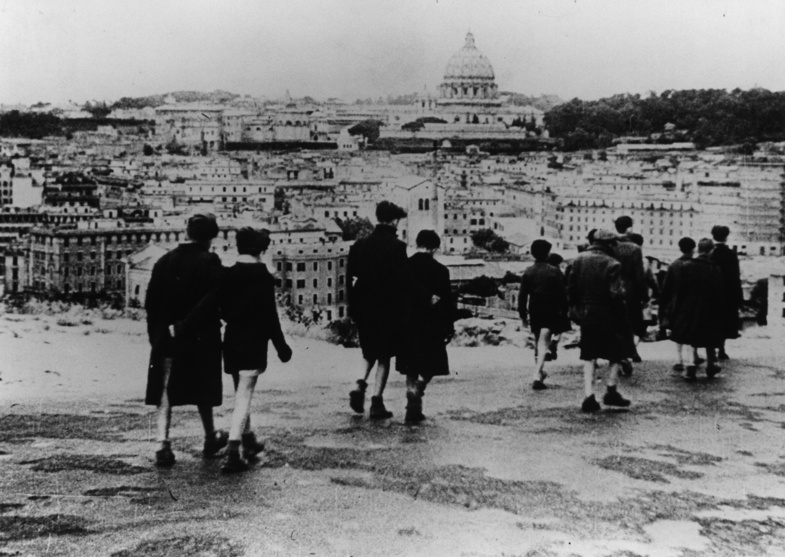
    “It will end, Pina, and spring will come again, more beautiful than ever, because we’ll be free. We have to believe it and want it.”

    Made just two months after German forces left Rome, Roberto Rossellini’s Rome, Open City is widely regarded as the catalyst for Italian Neorealism, and perhaps even popularized realism in global cinema. Using a handful of non-actors, war-stricken shooting locations, and a style meant to emulate truth rather than fiction, Rossellini’s Rome, Open City was not only a film rebelling against fascism and the defeated Nazi regime but also against the structure of film itself. Rome, Open City, and many other Italian films in this period, brazenly pushed back against the globally accepted Hollywood style of filmmaking (A-list actors, sound stage production, invisible editing, happy endings, etc). In doing so, Italian filmmakers began to make films that more accurately reflected those that watched them: everyday people. With representation came cultural consciousness, and as Italy’s working-class began to expand in the aftermath of the war, so did its cinematic depiction. 

    The film itself is a war drama that follows the lives of multiple Italian citizens either suffering from or rebelling against the Nazi occupation. Pina, an unrelentingly passionate wife and mother live day to day married to a Resistance fighter Francesco, as Don Pietro a virtuous yet also rebellious priest attempts to wander the moral gray area between sin and justice. As their struggles for liberation seemingly grow increasingly futile, Francesco promises Pina that “Spring” will come, or a time Italy is finally free from German rule and where they can all live freely together. This message remains thoroughly at the forefront of the film, even when Pina is unceremoniously gunned down and Don Pietro is executed. The film ends as a group of kids walk together out of frame, while  St. Peter’s Basilica, a well-known church, is seen in the background, a clear indication that while Rome still stands, and the youth still wander the streets, there can forever be hope that “Spring” will come. 

    Besides its clear optimistic message, Rome, Open City is also notable for its championing of the working class. While in the grand scheme of things it might have been an oversimplification on Rosselini’s part, Rome, Open City does not appear to present a country stricken with a socioeconomic power struggle, but rather a unified national coalition against a singular oppressor. It is in this way that Rome, Open City, and other Neorealist films further rebel against western standards, instead of looking to uplift the middle class in a new emerging social hierarchy. While Rome, Open City concerned itself with the arrival of “Spring”, the Neorealist films following it proved Spring was just the beginning of a new national struggle aimed at rebuilding and rediscovering identity.

    Symbiopsychotaxiplasm: Take One (1968) Dir. William Greaves

    “Terry, your job is that you’re the person that is in charge of filming this film being filmed. Okay?”

    1968 is perhaps one of the most tumultuous, iconic, and monumental years in American history. However, before society’s fateful move away from the rambunctious free love attitude of the 60s, rebellious sentiment seeped into film, arguably culminating in William Greave’s boundary-breaking docufiction titled Symbiopsychotaxiplasm: Take One. 

    The film’s premise is presented in a rather unbelievably innovative fashion, as it works to present a clear allegory for revolution between a filmmaker and his crew. Director William Greaves is filming a scene in the park with actors, and with him are three sets of film crews—one focused on the actors for the immediate plot, another instructed to film behind the scenes of the first crew, and the third given complete creative freedom as to the subject of their coverage, whether it be people walking in the park or a dog lying in the grass. What follows is a complete deconstruction of documentary filmmaking, an entirely revolutionary multilayered look into both narrative, documentary, and spontaneity. However, the innovation doesn’t stop there, as in a later key scene, a group of crew members begin to question Greaves’ abilities as a filmmaker, suspecting they are supposed to secretly contribute to the film’s structure without the Director knowing in an attempt to salvage what they consider to be a doomed project. 

    Greaves himself further elaborates on this connection between avant-garde creation and revolution in the film. When discussing his intentions to force the crew to revolt against his own film, a film Greaves acknowledged was never going to work, the film suddenly presents itself as a self-contained metaphor for the changes America was undergoing in the 60s. Greaves explains that when a group of educated and problem-solving individuals identifies a broken system, it is their job to rectify it by any means necessary. In a profound and revealing conversation in the park, the Director labels his film (both the core scene the first crew was shooting and the structure of all three crews together) a flawed approach, one that he hoped his crew would not only realize was defective, but one they would rally together to fix. By joining together before this revelation, and working together to question, debate, add meaning to, and challenge Greave’s vision and control, the crew inadvertently gave much more meaning to the film itself and helped cement it as one of the most impressive revolution films of all time. It is in this sense that Symbiopsychotaxiplasm: Take One is one of the most innovative and effective revolution films because, besides its structure, it expertly reveals itself to be a brilliant allegory for the collective challenging of authority and well-organized change. 

    Throw Away Your Books, Rally on the Streets (1971) Dir. Shūji Terayama
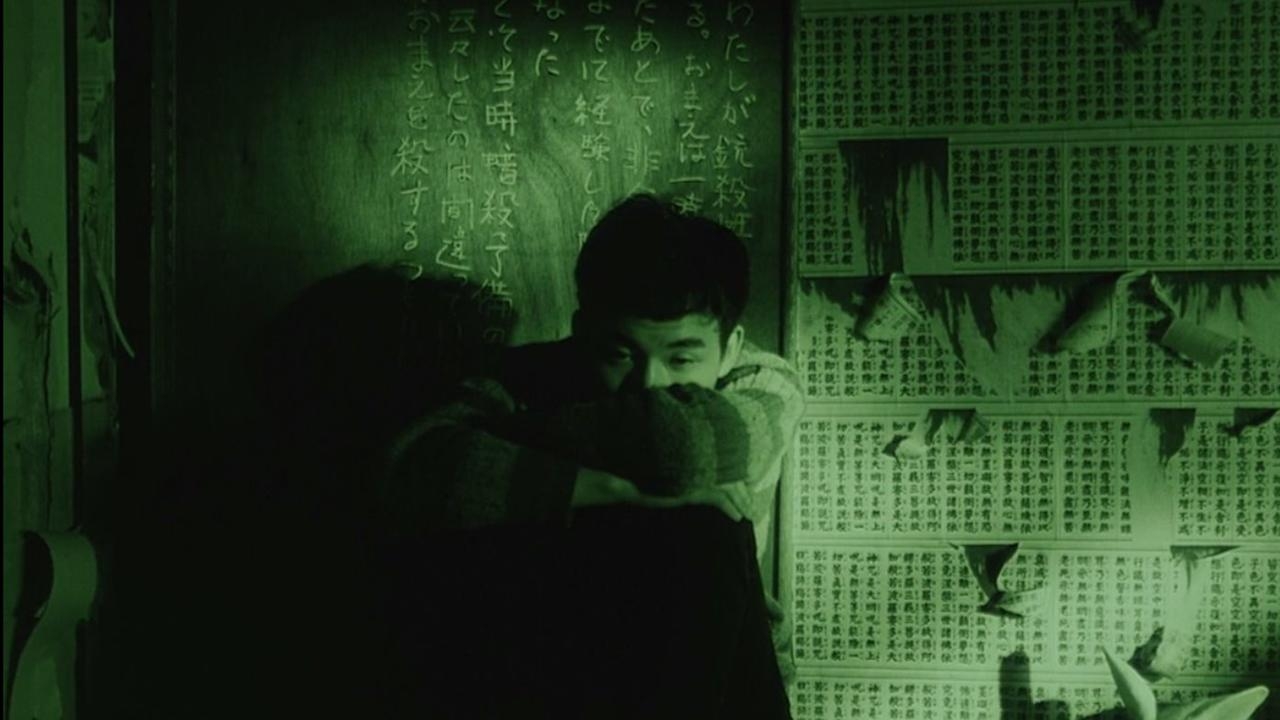
    “Even people who don’t like America like running hot water, their own cars, Hollywood movies, a high standard of living.”

    Following the atomic bombing of Hiroshima and Nagaski, the US occupied Japan from 1945 to 1952. During these seven years, the US initiated sweeping social and political reforms aimed at propping up Japan as America’s capitalist puppet. The US initiated laws to establish Japan as an egalitarian society with a strong consumerist economy. Even after its withdrawal, the US maintained a strong military force in Japan allowed by the 1952 Security Treaty. This agreement became a contentious topic for Japanese youths, who protested against the US’ continued military presence first in 1960 and later in 1970. What was to be later known as the Anpo Protests birthed strong anti-capitalist and anti-US sentiment in the emerging anarchist Japanese youth. This radical shift in behavior did not go undocumented in film, and I think the epitome of Japanese angst, rebellion, and bitterness is seen in the experimental playwright Shūji Terayama’s debut feature film, Throw Away Your Books, Rally in the Streets. 

    The film is unlike anything you’ve ever seen. Sometimes it’s a nauseating mess of bright colors and strange vignettes, at other times it shatters the fourth wall with confessions made directly to the camera, and never once does it feel like a normal viewing experience. In short, Throw Away Your Books, Rally in the Streets may be one of the best artistic renditions of anarchism. The anti-American imagery is undeniably provocative, yet what stands out more is the filmmaker’s utter disregard for rules, establishment, or any semblance of order, both in terms of filmmaking and societal expectations. Japan’s descent into materialism, a notion critiqued as early as the 1950s with the films of Yasujirô Ozu, seemed to be the main concern of Terayama, who correlated the country’s poor living conditions, banal philosophical/ political introspection, and obsession with national image as having direct correlation with America’s influence, a perspective undoubtedly born from and cultivated by the Anpo protests. 

    This is Not a Film (2011) Dir. Jafar Panahi

    “If we could tell a film, then why make a film?”

    Iran has long censored its media to an extreme extent, giving it a reputation as one of the most restrictive and difficult nations in which to create art. Filmmakers are often worried about imprisonment if their films are too vocal about Iran’s government, which has led many filmmakers to find artistic ways to criticize Iranian society without alerting the government, such as meta cinema or the use of child actors. Examples of this include one of Jafar Panahi’s earlier films titled The Mirror, which follows a young girl’s journey home from school and operated as a critique of the ways in which women are treated in Iranian society. Another is There is No Evil, a film consisting of vignettes all serving as scathing critiques of Iran’s death penalty. One of the most renowned and successful Iranian filmmakers that was repeatedly able to make films critical of the government was Jafar Panahi, who was put under house arrest and ordered to stop making films by Iranian leadership in 2011.

    With a pending trial and anxiety surrounding possible prison time, Panahi underwent a film project as a means of metaphorical and artistic escape; however, in order to abide by the unjust law enforced on him, Panahi first accepted the help of a friend and fellow filmmaker to film him. Over the course of one single day, This is Not a Film chronicles Panahi’s slow insubordination, as he goes from explaining his failed film endeavors to talking about past projects, to slowly filming his partner with his iPhone, to finally interviewing a staff member working at his apartment complex. The film works as a patient progression tracking the shift from compliance to rebellion, all in the form of a home movie. After being copied onto a USB flash drive and smuggled out of Iran in a cake, the film went on to premiere at the 2011 Cannes Film Festival.

    Hiroshima Mon Amour (1959) Dir. Alan Resnais

    “An entire city will be lifted off the ground, and fall back to earth in ashes…I meet you. I remember you. Who are you? You’re destroying me. You’re good for me. How could I know this city was tailor-made for love?”

    Following the end of WWII, many countries seemed completely unable or unwilling to address or discuss the traumatic and devastating lasting effects of war. While countries like the US and Italy seemed to jump at the opportunity to depict the global armed conflict on the screen, both as a means of profit and self-discovery, countries like Germany and Japan were left struggling to discover their new identity. Through this cultural setback came prominent societal conundrums these countries would need to face: selective amnesia as a result of national trauma, reluctance to revisit wrongdoing, and general unpreparedness to reexamine the events of the Second World War. French filmmaker Alain Resnais not only took notice of this, but took monumental strides to rebel against repression, denial, and cultural amnesia. 

    In 1956, Resnais released a short documentary titled Night and Fog, which utilizes both wartime archival footage with footage he shot on-site at various concentration camps long after they had been abandoned. The effect is undeniably poignant, demonstrating the indescribable connection between the past and present, as well as his trepidation regarding the sanctity of the future. However, I think his most revolutionary film in galvanizing viewers into pushing back against Post-War amnesia is the feature he made right after Night and Fog, titled Hiroshima Mon Amour.

    The film’s structure is rather simple. We follow two lovers, Elle and Lui, on one day as they casually discuss both of their distressing and tragic experiences regarding the end of the war. Elle, in the city of Nevers, France, fell in love with a German soldier who was killed the day Nevers was liberated, leaving Elle to be ostracized from her community. Lui was a Japanese soldier whose family was killed in the Hiroshima bombing. The two are irrevocably bound together through their experiences and memories, and while they attain some semblance of catharsis through their discussions of memory, pain, and regret, they ultimately decide they can’t be together. This realization is made when the two leads discover they only know each other through their trauma, that the events of Hiroshima and Nevers are truly the only identifiers between them, signifying a relationship that can only survive on emotional suffering. 

    Hiroshima Mon Amour is a revolutionary film in that it was able to critically and effectively discuss the complex ramifications of the war before so many countries were. While classified as a film belonging to the French New Wave movement, I think Hiroshima Mon Amour is as close as we’ll get to a global response to some of the most devastating and influential events of human history. Resnais uses Elle as a stand-in for the nation of France, and Lui as a representation of Japan, both nations suffering from the aftermath of the war, as the world struggles to use art as a means of recovery. Hiroshima Mon Amour reaffirms that the memory of tragedy is inescapable, yet the balance between remembrance and indulgence is one that needs to be traversed delicately, for the lines between recovery and denial can easily be blurred. 

    The Act of Killing (2012) Dir. Joshua Oppenheimer

    “What I regret… Honestly, I never expected it would look this awful. My friends kept telling me to act more sadistic, but then I saw the women and children. Imagine those children’s future. They’ve been tortured. Now their houses will be burned down. What future do they have? They will curse us for the rest of their lives.”

    In 1965 and 1966, Indonesia experienced a wave of mass killings targeting “supposed” members of the Communist party. Among the almost one million murdered include many individuals with no true connection to Communism. Some were killed because they spoke out against the government, some because they disobeyed the Death Squad leaders, and many because they were sadly just in the wrong place at the wrong time. Almost 50 years later, filmmaker Joshua Oppenheimer would travel to Indonesia to make a documentary about these Death Squad leaders, under the ruse of attempting to reenact their horrid “accomplishments” so they can recreate them in their favorite styles of film (western, gangster, etc.) However as they recount their undeniably reprehensible and unforgivable acts of violence, it’s clear it begins to weigh on some of their consciences. It isn’t often we as the audience get to see the other side of a power struggle, because The Act of Killing is not a film about the oppressed, instead it looks to answer the question: how do murderers sleep at night? The answer at first: shockingly soundly. 

    Through film, Oppenheimer forces these evil men to act as their helpless victims. By using the very film we are watching as a tool for empathy (by having the men act in his film as the victims), Oppenheimer finally gets at least one of the Death Squad members, Anwar Congo, to experience the true pain and immobilizing terror he caused so many people. The audience can only hope this leads to a true semblance of remorse from the mass murderer. The Act of Killing creatively moves past the struggle for justice and centers its attention on questions surrounding culpability and guilt for the unredeemable few on the other side of the metaphorical trenches. 

    “The Revolution introduced me to art, and in turn, art introduced me to the Revolution!”

    Albert Einstein
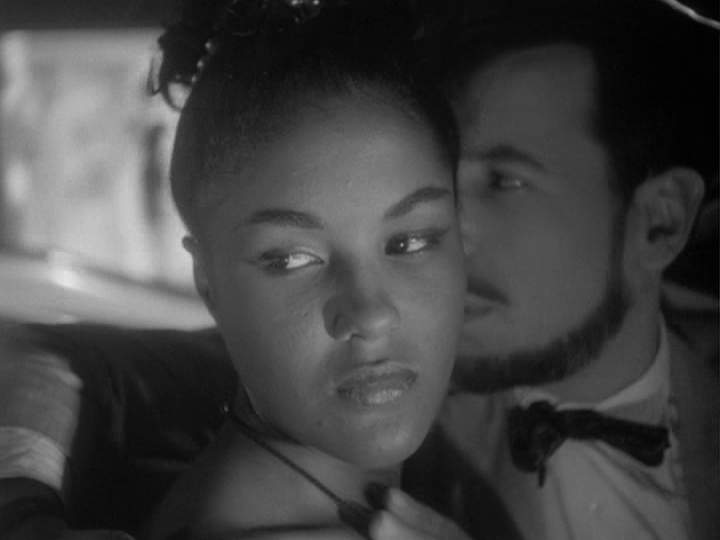
    For centuries the leading art form for revolution has been the written word. However, as the world has globalized and modernized, the library has been usurped by the theater, the author has been overthrown by the director, and ultimately, the reader has been beheaded by the viewer. Stories of revolution will forever best be told by the most cutting edge and revolutionary art form to exist, and until the apple falls, that medium will be film. I think this collection of films undoubtedly proves that.