• Small Steps: Dr. DeChavez’s Journey into Literature

    Written by Guadalupe Rodriguez

    This is how it all starts: it’s the first time that you see yourself. And it’s not just like seeing yourself in the mirror when you wake up in the mornings or when you take a shower in the evenings. It’s not like when you notice you have your mother’s hair one day as you stare at her. Or when you realize that the nose you want to go under the knife is actually a treasure your dad gave you. It’s more than that. It’s not reading Judy Blume, and ending it to the thought of oh I wish I could be like this.Or fantasizing about living in a nice house. No, this is better than Judy Blume. This is seeing yourself in San Antonio, growing up in a poor household, with a young narrator, but [who] was also very smart.It’s something “familiar and recognizable.And when you read this piece it made [you] feel that [you] didn’t need to be somebody else.

    This is Yvette.

    (more…)

  • Joan Didion: The Center Will Not Hold and the Folly of Loving Relatives

    Written by Abby Adamo

    For over a decade, Joan Didion’s name has been synonymous with grief. First with A Year of Magical Thinking in 2005 and then in 2011 with Blue Nights, Didion writes of the unthinkable tragedy of losing her husband and then—within the same year—her daughter as well. In the Netflix original documentary, Joan Didion: The Center Will Not Hold, created and directed by her nephew, Griffin Dunne, we see the rest of the story. From her childhood with a severely depressed father to her early days writing for Vogue to her casual dinners with Linda Kasabian from the Manson trial, the documentary covers Didion’s life before grief.

    (more…)

  • The Importance of Generating Compassion as a Fiction Writer: Karen Shepard at the Texas Book Festival

    Written by Carolina Eleni Theodoropoulos

    A couple of weekends ago at the Texas Book Festival, Karen Shepard presented her new collection, Kiss Me Someone, while in conversation with Karen Russell, author of Swamplandia! Shepard spoke heavily about the responsibility she feels as a writer to cultivate compassion for characters that sometimes appear monstrous.

    (more…)

  • Emily Wilson: First Woman to Translate the Odyssey into English

    Written by Angie Carrera

    As a contemporary reader, when one hears the word “complicated,” it is natural to assume that someone is speaking of their newly changed relationship status, because everything in the twenty-first century is deemed “complicated.” British classicist Emily Wilson wrestled with this word and took into great consideration its social nuances and our modern-day ideologies to describe Odysseus when at the age of 45, she became the first woman to translate the Homeric epic, the Odyssey, into English.

    (more…)

  • The Era of Pop Poetry

    Written by Brandi Carnes

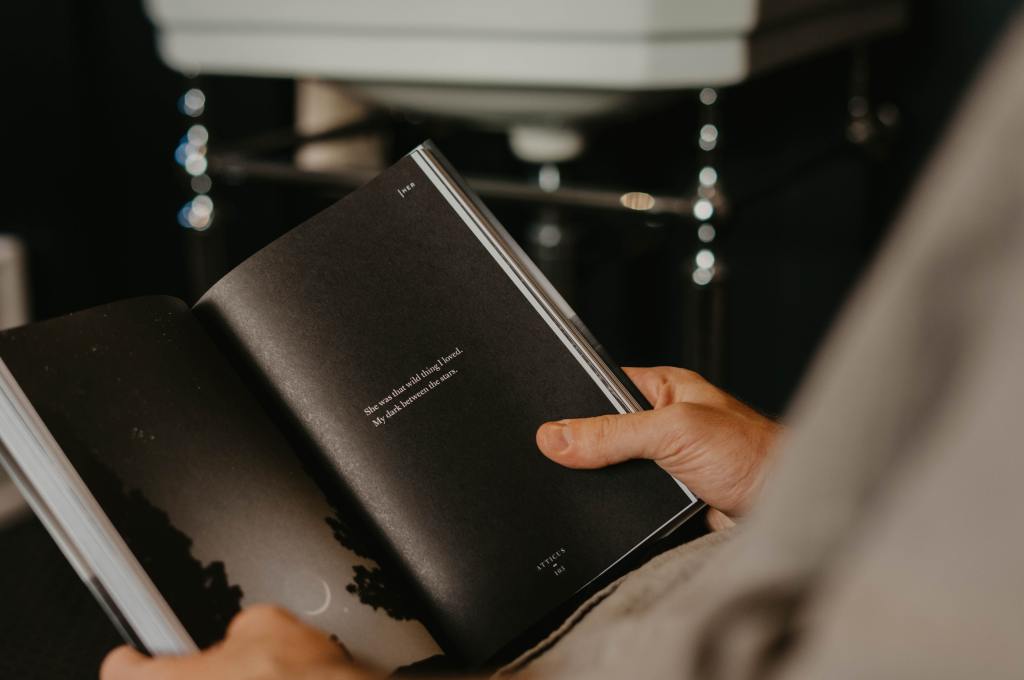
    Rupi Kaur’s latest release, The Sun and Her Flowers, is only the second book in the young writer’s career, but it’s already among the most popular works on the shelves. Kaur’s explosive career, along with similar writers such as Atticus and Lang Leav, are at the forefront of a literary revolution. The nature of the poetry community is undergoing an era of change, and maybe not for the best. Instapoets, self-made writers who publish their work on social media, are the faces of a culture which both revitalizes and reduces the ability of readers to connect with poetry.

    (more…)

  • From Then to Now:  John McWhorter’s Revisionist History of English

    Written by John Calvin Pierce

    “English is more peculiar among its relatives…in what has happened to it grammar than in what has happened to its vocabulary” (XII). The story of English and how it has lost a “perplexingly vast amount of grammar” is the main concern of John McWhorter’s book Our Magnificent Bastard Tongue: The Untold Story of English. McWhorter re-emphasizes the role of Celtic influence in the formation of English grammar, specifically regarding the “meaningless do” construction, as well as the present progressive tense “-ing.” He then re-examines the role of the Viking invasion and settlement in Britain as a potential suspect in the case of English’s extreme loss of “grammatical richness”that is, inflectional endings and a complex case system, both of which Old English has plenty. In both the case of the Celts and Vikings, McWhorter argues, there are social and political factors that have obscured our understanding of their influence within the traditional histories.

    (more…)

  • The Faint Words of an Intergalactic Jazz-Being: Sun Ra’s (Overlooked) Poetic Output

    Written by Luis De La Cruz

    “Love and life / interested me so / that I dared to knock / at the Door of the Cosmos…” “Door of the Cosmos,” Sun Ra and his Intergalactic Myth Science Solar Arkestra

    The relationship between jazz and poetry is incontrovertible. Major figures in the American poetic tradition have engaged with jazz forms and philosophies in their works—think Hughes, Ginsberg, Scott-Heron, Ferlinghetti, Baraka, Cortez. One figure in particular sits squarely (and rather conspicuously) in that wonderful juncture between jazz and poetry: the eccentric, cosmic, and always mind-expanding jazz man/poet/philosopher Sun Ra. While primarily known for his fiercely experimental, avant-garde, Afro-futuristic jazz compositions (though none of these terms adequately illuminate just how brilliantly strange and novel-sounding his discography is, even today), Sun Ra’s engagement with poetry was significant on its own —it would be a severe understatement to claim that Sun Ra simply dabbled in poetry.

    (more…)

  • The Bones of Stesichorus

    Written by Julia Schoos

    “What difference did Stesichorus make?” asks Anne Carson in the beginning of Autobiography of Red (3). For years, Geryon’s story lived in the mouth of the people focusing solely on Herakles and his journey, with Geryon merely an hurdle to be overcome during his labors. First and foremost a creation of folklore, the tale of Herakles’ acquisition of the red cattle, as well as his slaughter of Geryon, traveled through oral tradition long before it reached antique pottery and eventually the written word. The narrative carries every trademark of the traditional heroic journey, as told through the eyes of Herakles. However, Stesichorus’ approach was different. Titled Geryoneis, which roughly means “The Geryon Matter,” the surviving fragments

    tell of a strange winged red monster who lived on an island called Erytheia (which is an adjective meaning simply ‘The Red Place’) quietly tending a herd of magical red cattle, until one day the hero Herakles came across the sea and killed him to get the cattle” (Carson, Autobiography 5).  

    (more…)

  • Interview with Lisa L. Moore

    Written by Dan Kolinko

    When Lisa L. Moore thinks about the Pope, she thinks about an isle of lesbos. On her office door is a photo of a cartoon cat with a tagline that reads: “Ask me about my office gun policy.” Moore is a professor at UT and a literary critic whose main focus is on feminist and queer theory. On the side, Moore writes poetry about police brutality, lesbianism, motherhood, the recent presidential election and more. In addition to working on a book entitled The Lesbian History of Sonnets, her new chapbook, 24 HOURS OF MEN, will be published by Dancing Girl Press in April.

    (more…)

  • Fanny Fern’s Obscurity and Male Dominance in Literary Circles

    Written by Julia Schoos

    Fanny Fern wrote as if the Devil was in her—or so spoke Nathaniel Hawthorne. Born 1811 as Sarah Willis, Fanny Fern was the first female newspaper columnist in the United States, and by 1855, the highest-paid columnist of the 19th century. However, while her contemporaries Thoreau, Whitman, and Emerson are considered household names, Fern’s name is almost shrouded in obscurity. Her works, now lauded as dynamic and potent, are most often encountered in collegiate classes with an eye on feminist literature—a bizarre turn of events, considering that she outsold all of her male contemporaries during her lifetime. Is it really such a bizarre turn of events?

    (more…)

  • Kazuo Ishiguro, the Nobel Prize, and Some Advice About Ploughing On

    Written by Delia Davis 

    On Thursday, the Swedish Academy awarded the 2017 Nobel Prize in Literature to Japanese-born British novelist Kazuo Ishiguro. “In novels of great emotional force,” wrote the academy, Ishiguro “has uncovered the abyss beneath our illusory sense of connection with the world.” Ishiguro’s oeuvre includes novels, screenplays, short stories, and even lyrics. Some of his more prominent works are The Remains of the Day (1989) and Never Let Me Go (2005).

    (more…)

  • Celebrating Native American History through Literature

    Many Native American artists commemorate their history and heritage through the creation of beautiful paintings, tapestries, pottery, woven baskets, jewelry, literature and many other forms of art. Today, the Hothouse staff celebrates the following Native American writers and their works.

    N. Scott Momaday

    Pulitzer Prize winner N. Scott Momaday’s Again the Far Morning is a combination of poetry from previous collections (“Angle of Geese” (1974), “The Gourd Dancer” (1976), “In the Presence of the Sun” (1992), and “In the Bear’s House” (1999)) and new poems. Momaday is considered one of the founders of the Native American Renaissance, and his writing focuses on Kiowa traditions and history. Momaday’s father told him Kiowa stories and sang him songs from the Kiowa oral tradition when he was a child, a memory that influences Momaday’s own literary voice. Again the Far Morning spans forty years of Momaday’s work and offers a broad overview of a complex and heterogeneous career. Momaday’s works are evocative and heartfelt, a tone Momaday consciously cultivates. In his preface to Again the Far Morning Momaday writes: “My principal objective as a poet is to write directly from my mind and heart in the traditions that are my heritage. To trade in the wonder of words and to be acquainted with those whose best expressions have sustained us, that is literature.”

    ~Mandy Whited, Nonfiction Board 

    Joy Harjo

    Joy Harjo is a poet, musician and screenwriter recognized as a major voice of the 1960s-era Native American literary renaissance. Harjo believes in the power of oral tradition and uses literature readings and musical performances to express her poetry. She is also an active member of the Muscogee Tribe and is known for her strong support for women’s equality. Her best-known work is a collection of poetry called In Mad Love and War (1990), which won an American Book Award and the Delmore Schwartz Memorial Award. I enjoy Harjo’s poetry because of the ways she beautifully links identity and nature and how she elegantly portrays the importance of human relationships with the natural world.

    ~Meredith Furgerson, Nonfiction Board Editor

    Joy Harjo’s “Perhaps the World Ends Here” is an introspective poem that, through soft spoken words, makes a powerful statement about Native American culture and the significance of family ties. The poem centers around a dining room table that represents the family and the brute needs of life and personifies the dreams of the Native American people. All who eat at the table support each other and grow together like a garden. These people thrive as one body and give freely for the mutual support of their brothers and sisters. Regardless of external forces and injustice, they are able to come together as one and overcome oppression. The table is this ancestry which drives them onward and hangs as a ribbon of support and hope for them in desperate and confusing times. The table, Harjo says, “is a place to hide in the shadow of terror. A place to celebrate the terrible victory.” It is the beginning and end of their people and gives hope that as long as these oral traditions continue, the joy and the sorrow of their family members will intermingle beautifully. It is a sweet and hopeful poem that embraces sadness but overcomes it with the beauty of new life and the imprint left by their mothers, fathers and brothers.

    ~Abbi Gamm, Poetry Board

    Sherman Alexie

    Sherman Alexie’s poem “Survivorman” is striking due to its theme of humanity in the face of disaster. It describes a man carrying another to safety over 25 miles of desert, imparting a sense of altruism that may be increasingly relevant over the next four years. The Macmillan Dictionary defines survivor as “someone or something that still exists after every other member of a group has died or been destroyed.” This definition highlights the ruthless, competitive or self-serving attributes typically associated with surviving, but Alexie contradicts this by claiming goodness to be integral to Survivorman. In his poem, both Survivorman and the man whom he carries live, however it is clear that Survivorman alone is considered the true survivor. It is the choice of compassion in the face catastrophe that defines the character’s survival.

    ~Madeleine McQuilling, Nonfiction Board

    Leslie Marmon Silko

    Ceremony is a postmodern novel by Leslie Marmon Silko, a Native American writer of Laguna Pueblo descent. The novel follows the story of World War II veteran Tayo, who struggles with posttraumatic stress disorder, through his journey as a mixed-race Native American, exploring the intersection of spirituality and reality. He learns to reject his socialized sense of shame and to embrace the ancient traditions of his family. This novel will be applicable to anyone who has felt marginalized in society, who has felt guilt and shame, and who feels themselves separated from the past. 

    ~John Calvin Pierce, Poetry Board 

    Though published almost 20 years ago, Leslie Marmon Silko’s short story collection Yellow Woman and a Beauty of the Spirit: Essays on Native American Life Today touches on topics that are especially relevant in our current political climate: immigration and the status of minority ethnic groups. In the titular, semi-autobiographical story “Yellow Woman,” a woman from the Laguna Pueblo struggles with questions of her identity and allegiances due to her mixed ancestry. With intimate dialogue and description, the story provides a close look at the life and love of a Laguna woman and the people nearby. They all literally seek to know who each other is.

    ~Jeremy Huang, Poetry Board