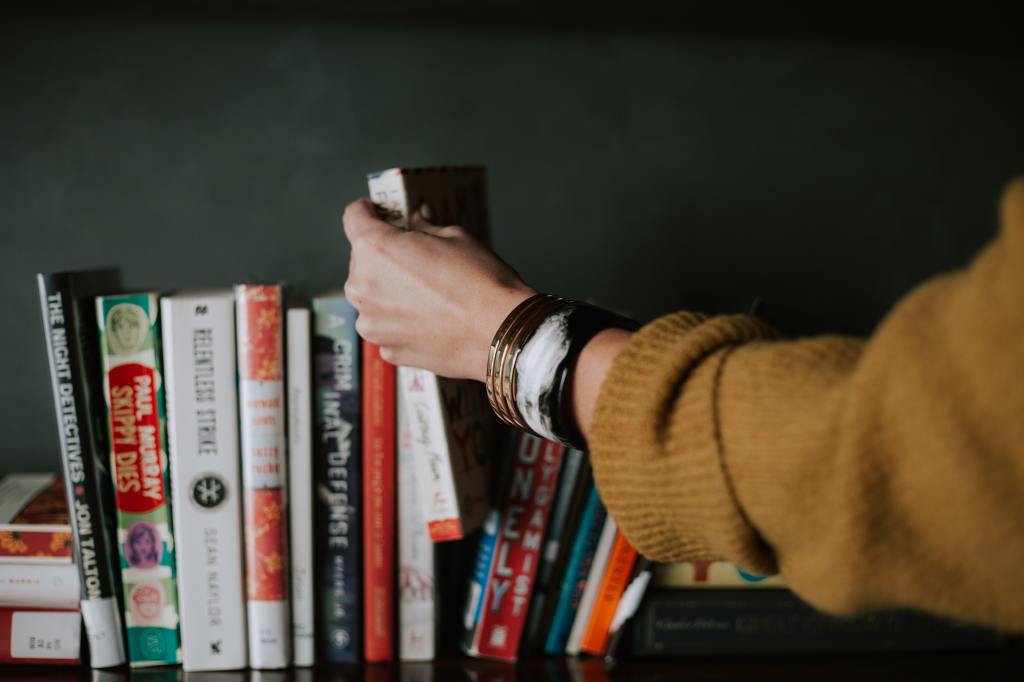
• The Journey to America: 6 Authors Offer their Stories about Immigration

    Written by Christie Basson

    No human is an island, and neither should they be expected to be.

    No matter the genre or the style of a writer, it is impossible that they could write in isolation from their past or from the world roaring around them. The political or social commentary might be more nuanced in some works but nonetheless the influence is there because nothing occurs and nothing is produced in a vacuum. Immigration, for instance, has never been more prominent in politics, in society, and in the arts. Writers who tackle these perspectives are not only dealing with the issues we should all be invested in (DACA, the travel ban, a U.S.-Mexico wall, refusal of refugees, and restrictions on legal immigration, to name a few), but they bring perspective to people who would not otherwise have been alerted of changing times. Not that diverse perspectives and stories of immigrants didn’t exist before, but we are thankfully moving towards a time when diversity is celebrated and voiced.

    One must only look to, say, the 2018 Texas Book Festival to see the surge in interest in the immigrant story, told by the immigrants or families of immigrants themselves. Especially in Texas, this is an important topic, and the Festival focused heavily on immigrant issues. It featured second generation authors like Celeste Ng and Elaine Castillo, and held panels focusing on culture and heritage. The festival promoted the voices we need to be hearing and pushed the boundaries we need to be pushing. Panels also covered topics such as undocumented immigrants, bilingual authors, and political issues; one could find these stories in fiction, poetry, and nonfiction, in memoir or journalistic format. With their books, these authors are sparking the conversations that Americans need to have.

    In celebration of this movement towards better inclusion and appreciation of diverse experiences, here are six authors who have embraced their immigrant experiences and used them as inspiration to form the words on the page. Arguably, these books have never been as important as they are now.

    Khaled Hosseini

    Afghanistan

    “He said that if culture is a house, then language was the key to the front door; to all the rooms inside. Without it, he said, you ended up wayward, without a proper home or a legitimate identity.”

    Hosseini was born in Kabul in 1965 where his father was a diplomat and his mother a teacher. They were relocated to Paris in 1976 and then the U.S. in 1980. By then the Soviet Army had invaded Afghanistan after a communist coup and they decided it would be unsafe to return, so they sought and were granted political asylum in the United States. Hosseini completed high school and college (he studied medicine) in California.

    Hosseini started writing The Kite Runner in 2001 and since then has published three wildly popular novels about his homeland and its people. He was appointed a Goodwill Ambassador for the UN Refugee Agency and he has established The Khaled Hosseini Foundation which focuses on providing humanitarian assistance to the people of Afghanistan.

    Although he is perhaps best known for The Kite Runner, his novels A Thousand Splendid Suns and And the Mountains Echoed was received with equal enthusiasm. He is widely regarded a master of telling stories of family and connection, and relaying the Afghan culture in a heart rendering manner. He manages to seamlessly weave the tumulus setting of Afghanistan with the beauty of the people and the culture and leave us with stories that find a place inside us and remain there.

    Recommended Book: And the Mountains Echoed

    Ibi Zoboi

    Haiti

    “So trying to come to America from the wrong country is a crime?”

    Zoboi was born in Port-au-Prince in Haiti and immigrated to New York with her mother when she was four. She has published numerous short stories that were well-received as well as American Street which was a National Book Award finalist and Pride, published earlier this year. She also edited and submitted to the anthology Black Enough.

    American Street directly deals with the immigrant experience, especially in relation to the expectations the United States has of foreigners. After her mother is detained by U.S. Immigration, the main character is forced to navigate Detroit as she discovers the realities of the American dream and its shortcomings. Forced to leave behind Creole and her Haitian mannerisms, she is quickly brought to confront her identity and place in American society as an immigrant. The story draws heavily on Zoboi’s own experiences and the cultural touches infused through the story is the perfect way to tell this important story.

    Kevin Kwan

    Singapore

    “Aiyoooooh, finish everything on your plate, girls! Don’t you know there are children starving in America?”

    Kwan was born and raised in Singapore until the age of eleven when he moved to the United States. He received his first degree in creative writing from Houston University and then moved to Manhattan. He spent some time as a visual consultant and then 2013 his novel, Crazy Rich Asians became an international bestseller.

    Crazy Rich Asians came out this summer as a movie and was extremely well-received. Kwan manages to take a look into the Asian elite and offer these ideas to his worldwide audience in a way that feels fresh. Whereas many well-known classic novels on the Asian experience focuses on traditionalism and hard-working immigrant perseverance (think The Joy Luck Club), Kwan manages to pull Americans into the lives of the absurdly rich in Singapore and completely captivate them.

    The movie is the first in 25 years to have an all-Asian cast and is the highest grossing rom-com in nine years. Furthermore, Michelle Yeoh would be the first Asian actress to be nominated for an Oscar in 12 years. Although the success of the book and by extend the movie is commendable, it has managed to highlight a lack of Asian representation in American culture and media that should not exist.

    Good news: Crazy Rich Asians is only the first book in the trilogy. Be sure to read all three before the next movie premiers!

    Recommended Book: Crazy Rich Asians

    Ocean Vuong

    Vietnam

    “When they ask you / where you’re from, tell them your name / was fleshed from the toothless mouth / of a war-woman. That you were not born / but crawled, headfirst— / into the hunger of dogs. / My son, tell them / the body is a blade that sharpens / by cutting.”

    Vuong was born in Ho Chi Minh City, Vietnam and moved to the U.S. at the age of two. He spent a year in a refugee camp in the Philippines with his mother and seven siblings before they settled in the housing projects of Hartford. His poetry widely deals with transformations, desire, and loss. Here he talks about being the only literate member of his family (the war interrupted most Vietnamese people’s educations) and the responsibility he feels to continue the traditions and stories of his family.

    He started by publishing shorter books like chapbooks (No and Burnings) before publishing his first full collection of poetry, Night Sky with Exit Wounds, in 2016. His work is acclaimed internationally—his novel Night Sky with Exit Wounds is available in five languages and soon five more translations will be added.

    Vuong’s poetry covers many subjects such as sexuality, family, connection, and history. He writes about the Vietnam torn apart by the war, the one his grandmother witnessed change. He also addresses his own experiences as an immigrant and refugee: he manages to examine the aftereffects of war on his homeland while simultaneously addressing his own role in American society and how the two come together to form his identity as an immigrant in between two countries.

    Recommended book: Night Sky With Exit Wounds

    Recommended poem: “Kissing in Vietnamese”

    NoViolet Bulawayo

    Zimbabwe

    “When we got to America we took our dreams, looked at them tenderly as if they were newly born children, and put them away; we would not be pursuing them. We would never be the things we had wanted to be: doctors, lawyers, teachers, engineers. No school for us, even though our visas were school visas. We knew we did not have the money for school to begin with, but we had applied for school visas because that was the only way out.”

    Bulawayo was born in the Tsholotsho District in Zimbabwe in 1981. She moved to the United States for college and received her bachelor’s degree from A&M University in Texas. She has written many short stories and one novel, We Need New Names, published in 2013.

    Bulawayo focuses a lot on her experience as a Zimbabwean to influence her work and has won the Caine Award for African Writing for her short story Hitting Budapest (which focuses on a gang of Zimbabwean street children). Her work is often told from the viewpoint of children as she says, “There is something universal about kids. We can all relate to them. They are children, they have no power.”

    Her novel, We Need New Names, revolves around the political and social climate after Robert Mugabe took rule of Zimbabwe and the country hit an economic downfall. She says the novel is less fiction and more of an effect of politics. Even though she lived in the U.S., she was connected to her motherland as it plunged into crisis. Her helplessness as her family and friends suffered was the inspiration for writing the novel.

    Recommended Book: We Need New Names

    Nicola Yoon

    Jamaica

    “If people who were actually born here had to prove they were worthy enough to live in America, this would be a much less populated country.”

    Yoon was born in Jamaica and moved to Brooklyn as a child. She studied Electrical Engineering at Cornell before becoming hooked on creative writing. She has published two books: Everything, Everything and The Sun Is Also a Star.

    She is another author whose novel has recently been adapted into a movie. The film adaption of Everything, Everything came out in 2017 and Yoon mentions the premise was based on the birth of her own biracial daughter whom she wanted to represent in the novel. The movie rights for The Sun Is Also a Star have also been bought by Warner Brothers and MGM so we may anticipate an adaptation.

    Yoon uses her heritage as inspiration for her work. Although The Sun Is Also a Star is targeted towards a YA audience, the premise is timely and very important (as is the case with many YA books after all). The story revolves around a character and her family who are about to be deported. It recounts their last few hours in the U.S. as they try to fight the inevitable. Be sure to read it before the movie comes out!

    Recommended book: The Sun Is Also A Star

  • The Monster Behind the Monsters: H.P. Lovecraft and the Search for a Divide Between the Art and the Artist

    Written by Alex Taylor

    As all fans of H.P. Lovecraft know, liking and enjoying his work is often paradoxical. Reading and discussing his stories is an exercise in both enthusiasm and restraint—praise and deprecation. Being a Lovecraft fan is at once an exciting entryway into a mysterious mythos and an indefensible position. While the indescribable entities of the Cthulhu mythos and the nightmare dreamscapes of Lovecraft’s horror-stricken New England settings fill us with wonder, the personal views of the man behind the pen are reason to shudder in disgust. There is nothing that can excuse Lovecraft’s virulent and dangerous racism—and this raises a difficult question: is it okay to enjoy Lovecraft’s writing despite his racist views?

    As a fan of Lovecraft and the horror genre as a whole, I have to answer the question with a half-hearted, unenthusiastic maybe.

    What does it mean to enjoy art in the first place? Does appreciation of a narrative necessarily imply endorsement? I think many people would agree that it’s possible to love a painting at first sight, before ever knowing who held the brush. Imagine if it was possible to view all art this way, held at a distance, just far enough that the name underneath the work was blurry and impossible to read. Perhaps it would ease the burden of liking art made by monsters. Perhaps, without any knowledge of the artist’s life, important contextual details about the time period or artist’s experiences would be lost, condemning the story to misinterpretation and misunderstanding.

    I’m certainly not the first person to write about dealing with art made by horrible people—other writers, like Claire Dederer have discussed the topic at length (you can read her article on Woody Allen here). Still, it is a struggle worth repeating, as we can never remove the ugly stains from our favorite authors, no matter how hard we try.

    Separating an artist from the art they create is a necessary, impossible thing to do. Above all else, I think we have to approach art with a kind of understanding, not to be confused with forgiveness or sympathy. In Lovecraft’s case, understanding his racism makes the burden of enjoying his works a little easier to bear. At the very least, understanding is a means of avoiding surprise. When you see a line in a Lovecraft story belittling immigrants or rejecting otherness, understanding at least allows you to think, “I know Lovecraft was a racist. I don’t have to agree with this line or this message just because I enjoy the story.” Just as you can reject a line while simultaneously choosing to enjoy the piece, you can reject an artist while simultaneously enjoying their art.

    In Lovecraft’s case, this is an important step in negotiating the line between enjoyment and endorsement. Just because you enjoy an artist’s work does not mean you have to endorse everything they believed. Liking art isn’t always an implicit proclamation of agreement. Art is entertainment. Art is human. You can’t always explain why you like something, why a story scares you or inspires you or makes you laugh. And that’s okay.

    Lovecraft also has the advantage of being dead.

    With modern authors, it can be more difficult to separate enjoyment from endorsement. After Junot Díaz was accused of sexual misconduct, many of my friends swore off his books. There are other cases, too, where an author’s views or lifestyle make it difficult to read their work. When buying someone’s books enables them to maintain their lifestyle, the line between enjoyment and endorsement becomes a lot less clear. Thankfully in Lovecraft’s case, most of his work is available for free online, so you don’t have to spend a cent to read it. Not that the money would help him now, anyway.

    An English professor once told me that an author is often the least reliable source when speaking about their own work. One student offered an interpretation of a short story given by the author himself, and my professor looked at the student, smiled, and said, “No.”

    Once a writer puts down the pen, he argued, they no longer have any reign over the story. It goes out to the world to become its own entity. This intriguing idea struck me as one method that might make appreciating a horrible artist’s work a little easier. Interpretation of literature is, perhaps, the most complained about aspect of English. “But that’s not what the writer really meant” is a phrase I’ve heard in English classes from middle school to my senior year of college. The thing is, that phrase implies its own interpretation—how can anyone possibly know what exactly the writer was thinking at the time it was being written? As an amateur writer, I don’t think even I can confidently say what I was thinking when creating a story. Writing is a contract between author and reader. Once an author puts something into a reader’s hands, it’s no longer theirs to control.

    Interpretation is a feel-good, violent act. It allows us to rip a story out of the hands of an author and say, “This is ours now. You no longer have any say over it.” It is a means of refusing to surrender a good piece of art to the will of a flawed artist. It is the literary equivalent of seizing the means of production—after all, how can an author survive without the mental labor of the reader?

    Interpretation is a feel-good violent act.

    Still, coming to terms with Lovecraft’s racism is a big, fat, disgusting pill to swallow. One that is often disgusting enough to keep Lovecraft out of the American literary canon.

    Another professor I had in a class on American horror told us that in an anthology of American literature over a thousand pages long, there was not a single mention of H.P. Lovecraft. It’s hard to say whether keeping Lovecraft out of American literature is the right thing to do. It is impossible to say that Lovecraft didn’t inspire and influence almost all the horror that came after him. Rejecting him from the American literary canon is, unfortunately, an instance of hypocrisy. We have a tendency to valorize unworthy people, and many other authors with their own extensive lists of horrible attitudes or beliefs are still represented in the American literary canon. Ernest Hemingway was abusive; Ezra Pound was anti-Semitic; Norman Mailer was homophobic. For many other authors, we have accepted that reading, enjoying, and discussing their work is okay despite their often-revolting personal views—and it seems strange to me that the man who singlehandedly influenced all the horror writing that came after him gets the short end of the stick.

    Lovecraft’s racism makes his case a difficult one. In other cases, though, the importance of separating the art from an artist is clearer. When Oscar Wilde was put on trial for his sexuality, he was arrested partly due to “evidence” from his 1890 novel The Picture of Dorian Gray that, in the minds of the prosecutors, proved he had committed “indecent acts.” In this case, it is an easy mistake to spot—a homophobic court’s literary interpretation should not constitute reliable testimony. Fiction is, after all, a lie. If it were true, it wouldn’t be fiction at all. Oscar Wilde himself wrote that, “Lying, the telling of beautiful untrue things, is the proper aim of Art.”

    So why is it so much clearer in this instance that we shouldn’t hold an author’s art against him as the ultimate explanation of his personal views?

    Well, for one, Oscar Wilde was not a raving racist. Lovecraft was also a prolific letter writer—and, on more than one occasion, he showed his bitter racism and hatred in the contents of those letters. The causation of the condemnation is also flipped in these two scenarios. In Oscar Wilde’s case, the work condemned the man; in Lovecraft’s, the man condemned the work.

    Still, the example raises some interesting questions about the messy tie between art and the artist. I think the more important question is whether an author’s personal life should have an impact on the merit of their work. Certainly, it wouldn’t make sense to read fiction like a blind application, keeping the author’s name and personal life totally out of view. And in some cases, like Lovecraft’s short story, “The Horror at Red Hook,” it is impossible to miss the racist ideology he invokes. With sentences decrying sections of the New York population as “a hopeless tangle and enigma [with] Syrian, Spanish, Italian, and negro elements impinging upon one another,” going on to say that it is “a babel of sound and filth,” it is not surprising that this story is one of the most hated that Lovecraft ever wrote (for more discussion of Lovecraft’s racism and “The Horror at Red Hook,” check out this article by Wes House). And if a work harbors obvious racist sentiment, its merit is and should be diminished, for the same reason that—despite the technical artistic abilities of the artists—no one argues that anti-Semitic Nazi propaganda holds any merit in the realm of visual art.

    If you go looking for monsters in Lovecraft’s work, you’ll have no trouble finding them. Just look out for the biggest monster of all—

    But what about stories where the author’s personal life is more easily avoided, where the intersection between the author’s beliefs and the story they told is blurred?

    Lovecraft’s “The Colour out of Space,” for instance, is notably devoid of racism. This makes the story much easier to judge as a work of literary merit. Not that “not being racist” is a particularly hard bar to reach or deserves praise—it only serves as a baseline for stories to be admitted into discussions of artistic merit. A story like “The Colour out of Space” is easier to enjoy than “The Horror at Red Hook.” Finding these diamonds in the rough can be difficult in the writings of a twisted person—even Lovecraft’s more famous stories like “The Call of Cthulhu” have some questionable sentiments. Despite its fame, “The Call of Cthulhu” describes its cults as a “horde of human abnormality,” “hybrid spawn,” and later goes so far as to say that most of these “men of a very low, mixed-blooded, and mentally aberrant type” are made up of “seamen, and a sprinkling of negroes and mullatoes.” It’s unquestionably horrible. So what do we say of this kind of author whose work has outgrown his own reach?

    Through interpretation and understanding, it’s possible—though difficult—to appreciate and enjoy Lovecraft’s work, despite his personal views. That being said, there are many ways to deal with an artist’s horrible qualities—all of them are legitimate. If separating the artist completely from the art works for you, more power to you—and if you’re more comfortable ignoring the work of an artist whose beliefs are threatening to you, that is equally legitimate.

    I’m not arguing that every person has to enjoy every author’s work, regardless of their personal beliefs; I’m only trying to figure out some ways we can separate the monsters from the monstrous. Perhaps it is a selfish desire—to keep Lovecraft’s mythos close to my chest while simultaneously keeping the author at arm’s length—and maybe the task is impossible after all. I think it’s a problem that must be treated on a person-by-person basis. The dilemma for me was in trying to reconcile the work that amazed and inspired me, the dark New England landscapes and twisted eldritch beings, with an author whose views I detest. If you go looking for monsters in Lovecraft’s work, you’ll have no trouble finding them. Just look out for the biggest monster of all—the one hiding behind the pen.

  • Halloween Staff Picks: Favorite Incantations

    As it happens another Halloween is upon us, and as it happens, it coincides with Hothouse‘s website launch for the 2018-19 academic year. To celebrate, as an act of inauguration, we thought we’d do something collaborative, something that will stir up the spirits and press them to set a watchful eye over our site. Just kidding—we’re not superstitious. Not all of us. Not always. We just like magic. Especially the kind that makes us feel a little shaken and a little spooked; the kind that repeats in our heads when we walk home at night and a car alarm goes off. So here’s what we came up with. If you want to contribute, share your favorite incantation in the comments below, so we can keep this spook fest going.

    About, about, in reel and rout
    The death-fires danced at night
    The water, like a witch’s oils, 
    Burnt green, and blue, and white.

    – Samuel Taylor Coleridge, “The Rime of the Ancient Mariner”

         Ever since I read this poem in high school it stuck with me over the years. When reading this section of the poem one feels as though one has fallen into the cauldron itself. Coleridge has some very strong imagery throughout the work and the poem is truly disturbing, not only for the scenes it evokes but for the moral dilemma it reveals. This chilling verse presents itself as he describes the ocean the hopeless seamen face, and the audience is left wondering what is illusion and what is true. After all, no one really knows what the depths of the ocean hides, nor what happens to the hapless sailors who sail its depths.  

    — Christie Basson, Website Staff Writer

    I ride a horse
    With hoarfrost mane
    And dripping forelocks
    Bringing evil; 
    The torch ends burn
    The middle brings bane.

     – Njal’s Saga, Author Unknown, Translation by Robert Cook

            This verse is a premonition spoken by a man carrying a torch on a grey horse surrounded by fire. This particular vision (referred to as a “witch-ride”) precedes an act of immense evil that will bring about widespread death, and in this case, the message is delivered by a frost-covered horse surrounded by a ring of flame. The “torch ends” burning illustrates essentially a ticking clock – once the torch burns down to the center, the evil will occur. The image conjured up by the author of this saga is powerfully haunting, and the image of a horse with a frosted and partially melting mane remains firmly embedded in my mind. 

    —Sydney E. Stewart, Website Staff Writer


    Let his blood leave no stain
    Though they beat  him
    Let him feel no pain 
    Let his bones never break
    And however they try
    To destroy him
    Let him never die
    Let him never die.

    -“No Good Deed,” Wicked, written by Stephen Schwartz and originally sung by Idina Menzel

         The imagery in the second verse of this song is gruesome, with Elphaba listing out all of the torture that poor Fiyero is going through. The first verse, the actual magical chant, is written in trochaic meter, which is the opposite of the iambic meter that we’re so used to hearing. This lends a jumpy beat to the spell. It helps, of course, to listen to the actual song because the music and Idina Menzel’s incredibly powerful vocals add panic and fear to the overall tone. The sounds, coupled with the realization that one can never truly do good in this world, make this incantation dreadfully terrifying.

     —Alyssa Jingling, Website Staff Writer


    Ph’nglui mglw’nafh Cthulhu R’lyeh wgah’nagl fhtagn.

         Straight from the chanting of a Louisiana cult come these words, to the terror and dismay of the investigator in “The Call of Cthulhu” by H.P. Lovecraft. As unpronounceable and unintelligible as the words look at first glance, it only gets stranger when the meaning is later revealed—this phrase roughly translates to “In his house at R’lyeh dead Cthulhu waits dreaming.” Though it appears to make more sense than the jumble of letters that came before, it is still incomprehensible—how can a dead being possibly dream? It is a secret, the story argues, that you mercifully cannot understand—for if you could, the eldritch knowledge it would impart would surely drive you screaming into madness. No one wants that. Or do we?

    —Alex Taylor, Website Staff Writer


    (Nancy continues with a new chant) Serpent of old, ruler of the deep. Guardian of the bitter sea. Show us your glory. Show us your power! We pray of thee, we pray of thee. We invoke thee. (lightning crashes)

    -The Craft

         “The Craft” demonstrates how witches are most powerful working in tandem with others. In this incantation, the four corners are invoked, and with them the four elements: air, fire, earth, and water. The number four is of definite pagan significance, and in this scene the fourth member of their clan is cemented. Their incantation is successful, and their powers subsequently surge.

    —Jay O’Bryant, Website Staff Writer


    The lake is my friend—a witch and the water
    Are bound with a tie—are mother and daughter;
    But the Fire is my lover, and licks my bones
    and the roar of his joy it covers my groans.
    My mother the Water,
    My lover the Fire
    One shall deliver me
    One shall betray me
    For an old hire.
    -Katherine Anne Porter, “Witch’s Song”


         I find this poem haunting for how it invokes the image of witches being drowned, the sacred feminine’s connection to Nature, and how that sacred connection might give woman power (of intuition, of knowledge, of sensitivity) though it can also destroy her as others use her nature against her. But all is not lost, alas if woman reclaims that power—Women who Run with the Wolves readily comes to mind.

    —Eleni Theodoropoulos, Website Editor


    SECOND WITCH: Fillet of a fenny snake, 
    In the cauldron boil and bake;
    Eye of newt and toe of frog, 
    Wool of bat and tongue of dog, 
    Adder’s fork and blind-worm’s sting, 
    Lizard’s leg and owlet’s wing, 
    For a charm of powerful trouble,
    Like a hell-broth boil and bubble.
    ALL: Double, double toil and trouble; 
    Fire burn and cauldron bubble.
    Macbeth


         An oldie but a goodie in terms of incantations, Macbeth’s witches hold a special place in my heart, as I have a vivid memory of a live Macbeth performance, where by the time the witches and their cauldron appeared on the stage, the air had become just slightly less muggy and the sun had retreated lower onto the horizon, perfectly timed for the witches’ brew and the mist. The witches’ screeches and laughter as they prepared this concoction were almost harrowing, and I’ve spent a long time thinking about them. 

    lves readily comes to mind.

    —Julia Schoos, Editor-in-Chief


    The chrysanthemum has gone sour,
    the chrysanthemum aches and drops,
    a pity what a pity, in early Frost Month,
    my platinum hand wilts, 
    as I sharpen my fingers, 
    hoping to nip the chrysanthemum, 
    the chrysanthemum lest it be nipped,
    in a corner of glittering heaven,
    the chrysanthemum is ill,
    the rancid chrysanthemum aches.

    -“Chrysanthemum Gone Rancid” by Sakutarō Hagiwara (trans. by Hiroaki Sato)

         There’s something about the music and imagery of the poem that makes it seem incantatory and spell-like. The poem, written by Japanese poet Sakutarō Hagiwara (1886-1942), uses repetition to generate a discomforting sense of fixation or obsession–it almost seems like saying the word “chrysanthemum” is a compulsion that the speaker can’t disobey. At the same time, the flower’s name is a structuring component of the poem, lending the poem a stilted, irregular rhythm and serving as the nucleus around which the rest of the poem revolves. The imagery of the speaker’s wilting “platinum hand” and its desire to nip the sickly flower, too, is unnatural and uncanny–it’s a wonderfully weird way to describe a pair of pruning shears. The poem succeeds in elevating this encounter between an aching chrysanthemum and aching human into something that is at once charmingly strange and disconcertingly beautiful; unfamiliar, yet oddly mesmerizing.

    —Luis De La Cruz, Managing Editor


    I bake my bread, I brew my beer,
    Soon the queen’s own son I’ll claim!
    For no one knows that 
    Rumpelstiltskin is my name!
    -The Brothers Grimm, “Rumpelstiltskin”

         This chant is at the climax of the tale right before Rumpelstiltskin falls. He revels in his triumph before he has achieved it and that helps the queen to defeat him, by naming him. I read this story as a boy, a version paired with vivid illustrations—and I never forgot the chant. I suppose it’s his hubris that makes me appreciate the gleeful song; he is about to rob a mother of her child and walk away scot free, but first he has to crow about it. Then, as now, it was satisfying to see someone cruel be tripped up by their own pride, so that their cruelty would be foiled. Or perhaps it’s the world of fairness most obvious in children’s stories still captivates me.

    —Kevin LaTorre, Website Staff Writer

    157

    Þat kann ek it tólpta

    ef ek sé á tré uppi

    váfa virgilná

    svá ek ríst

    ok í rúnum fák

    at sá gengr gumi

    ok mælir við mik

    I know the twelfth:if I see up in a tree

    a hanged corpse swinging,

    I carve

    and colour the runes

    that the man moves

    and speaks with me.

    -Hávamál

         These are Odin’s words, translated from the Old Norse epic poem Hávamál, carved into bone or brick in the early Viking Age. The twelfth of eighteen Ljóðatal (spells) which the Wisdom God won, this particular spell details the runes necessary to bring a man back from the cold darkness of Helheim. The Norse People believed in the physical power of language and the use of the word “colour” refers to the actual process of carving the rune. Thus the spell is as much an act of forming a character as it is the aural power of the incantation, and the song describing the power of the magic is the physical manifestation of that same magic. They were not wrong—literature has kept many living long past their last breath. 

    —Jojo Phillips, Website Staff Writer


    Give them some way of braying brassily
    For caressive calling
    Or to homophonous hiccoughs
    Transpose the laugh
    Let them suppose that tears
    Are snowdrops or molasses
    Or anything
    Than human insufficiencies
    Begging dorsal vertebrae
     
    Mina Loy, “Songs to Johannes”

         I have been recommending Mina Loy’s work to everyone lately, and this “incantation” was no exception. Though this poem is more of a love song than a spell, the excerpt reminded me of a faerie’s mutterings. From its captivating alliteration and transformative imagery to the vertebral descriptions and commanding voice, the passage has all the haunting, harrowing power of a fantastical creature’s croon.

    —Anna Dolliver, Website Staff Writer

    (more…)

  • More than Reckless Teenagers: In Defense of Romeo & Juliet’s Love

    By Caitlin Smith

    Thousands of high school students in English classrooms across the world read, under-analyze, and hate Romeo & Juliet each year. Why is what’s arguably become Shakespeare’s most recognizable tragedy met with such vitriol from students? Can they not relate to the teenage angst exhibited by the titular characters? Is the language too complex? Have all of us made a pact to disavow Shakespeare in an effort to stick it to our high school English teachers? I think the answer is simpler than any of these options: the play, a work of literary art by most accounts, is taught as a cautionary tale for teenagers who go against their parents’ wishes.

    Unfortunate, especially if you’re in the throes of that all-encompassing teenage angst yourself.

    In reality, Romeo and Juliet are complex characters thrown into a world of feuds largely against their will, looking for their own ways to survive and thrive. Whether their love is exaggerated or not, they cling to each other because they’ve been able to find complements in each other and chances to live their own lives instead of the lives their parents prescribe. The play isn’t a caution against teenagers in love; rather, it’s a caution to parents and authority figures who reduce adolescents to children with no free will.

    Juliet Capulet is known as one of Shakespeare’s weaker female characters. She meets a boy, falls in love, and then kills herself. On the surface, she lacks the depth of some of his more revered heroines (Lady Macbeth, Rosalind, Beatrice, etc.). At first glance, Juliet is nothing but a stupid, rash teenage girl. However, she exists within horrifying constraints typical for a woman of her time. No viable options outside of marriage. A controlling father who exercises complete control over her major life decisions. How could she not be looking for a way out? If that way out just so happened to be an attractive, sensitive boy who listened without being condescending? Come on, ladies.

    “Out, you green-sickness carrion! Out, you baggage!/You tallow face!” Juliet’s father screams at her after she expresses her displeasure at the thought of marrying Paris, a man older than her, whom she does not know beyond a name and face (3.5.160-161). In her father’s eyes, she is but a nuisance he no longer wants to deal with. Because Juliet doesn’t want to marry the man who has imposed himself on her family, she is no longer a person.

    I recently had the pleasure of studying abroad in Oxford, where we took a few trips to Stratford to see productions from the Royal Shakespeare Company, and their interpretation of this scene was striking. Juliet’s father went from normal, slightly perturbed father to a towering, yelling abuser in the span of a few minutes. He slapped her, turning her next lines all the more upsetting: “Is there no pity sitting in the clouds/That sees into the bottom of my grief?—/O sweet my mother, cast me not away” (3.5.2-8-210). Instead of Juliet coming off as foolish or rash, her decisions make perfect sense. If her own family isn’t going to respect her autonomy, does it really matter to them if she lives or dies? If Romeo is the only person who cares about her happiness, why not risk everything to see him again?

    Coupling specific acting choices with the words from Shakespeare’s script clarifies Juliet’s character beyond lovesick thirteen year old to that of a constrained young woman fighting for her right to individuality.

    David Hewn recently released a retelling of Romeo & Juliet, originally in audiobook form narrated by Richard Armitage for Audible, where Juliet actually survives the onslaught of deaths in her tomb and leaves Verona altogether in search of independence. In his Juliet & Romeo, both characters are fleshed out beyond what a two hour play can offer: Juliet craves education as a fiesty, proto-feminist, and Romeo is being forced into becoming a lawyer against his wishes to be a poet. Of course, as an adaptation, we can’t take Hewn’s interpretation as fact, however, his choices must have some basis in Shakespeare’s original text.

    Romeo as a charismatic poet-type isn’t unfounded in the script at all. We’re first introduced to him in a state of heartbreak, upset that the object of his affections isn’t interested. At first glance, his response to Benvolio’s inquiry as to what “sadness lengthens [his] hours”—”Not having that which, having, makes them short,”—is melodramatic, not endearing (1.1.168-169). Furthermore, Romeo’s quick turnaround to Juliet in lieu of Rosaline might be an example of fickleness. He can’t have one girl so he moves on to another without much of a thought. If that were the case, Romeo would move on once he realized Juliet is the daughter of his father’s sworn enemy. He certainly wouldn’t trespass on her family’s grounds just to see her again.

    In the RSC’s production, Romeo was just as charismatic as he appears in the text and other interpretations. He had an almost sexual chemistry with all of his comrades on stage, but only sought to further a romantic connection with Juliet. If he was just after sex, he could have looked for it anywhere. Instead, the production claimed he wants a real connection. He finds it in Juliet.

    In the text, Juliet is rational (to the extent that a Shakespearean tragic heroine is allowed to be) while Romeo throws himself headfirst into his emotions—an interesting reversal of gender norms, which typically place women at the helm of emotional outbursts. This dynamic is most easily observable in the balcony scene, when Juliet begs Romeo not to swear his affections by the moon:

    ROMEO

    Lady, by yonder blessèd moon I vow,

    That tips with silver all these fruit-tree tops—

    JULIET

    O, swear not by the moon, th’ inconstant moon,

    That monthly changes in her circled orb,

    Lest that thy love prove likewise variable.

    ROMEO

    What shall I swear by?

    JULIET

    Do not swear at all.

    Or, if thou wilt, swear by thy gracious self,

    Which is the god of my idolatry,

    And I’ll believe thee (2.2.112-121).

    She knows that the moon is too fleeting to be worth any oath, but Romeo is so in love he wants to swear on something. These opposing aspects of their personalities make them a great match, not just an expansion of lust at first sight or puppy love or any one of the ideas high school teachers like to provide in defense of why Romeo and Juliet are nothing more than naive teenagers.

    But, just as a good interpretation can make their relationship more complex, a cheesy or melodramatic one can tarnish its already-precarious reputation. Take Warm Bodies, a YA romance in which Romeo is R, a zombie with no memories of his human life who falls for the very much alive Julie. Juliet risking her life to love an actual menace to her health and wellbeing undermines her rationality. Even the critically acclaimed West Side Story is troubling as an adaptation—Tony and Maria take somewhat of a backseat to the Sharks and Jets. The most popular song from the whole soundtrack is “America,” which has nothing to do with our star-crossed lovers. Maria is scolded by her best friend with really reasonable concerns. Making Bernardo her brother dissuades me from siding with Maria when she chooses Tony. Why would you marry the guy who murdered their brother? I just don’t buy it. 

    Romeo & Juliet is more than an unrealistic love story wherein two inexperienced teenagers believe they’re in love and both directly and indirectly cause the deaths of friends and family. Juliet may be young and naive, but she’s also an opportunist. She’s about to be forced into marrying an older man she has no connection with. When Romeo enters her life, she sees a way out. It takes brains and guts to hitch your waggon to a guy you barely know, but Juliet has both and weighs the pros and cons herself, coming to the conclusion that this Montague boy might just be the break she’s been looking for. Romeo, for his part, just wants love. His world is not the evil, conniving thing it is to his parents; rather, it is something to be shared with people, with a beloved.

    If love languages existed to any extent in Verona, Romeo would know his by heart. He feels things so intensely; necessarily, he needs someone to counteract that. Juliet is perfect, not only in that she shares his affections, but she’s shockingly levelheaded when the time calls for it. All in all, the tragedy of these star-crossed lovers is not their fault; it’s the fault of those of us who, like their parents, reduce them to simple-minded adolescents who couldn’t possibly know about love.

  • Interview with John Morán Gonzáles

    Written by Guadalupe Rodriguez

    Texas land is huge—with approximately 28 million people, the faces of Texas are colorful, and filled with different experiences. From rich stories of black and Latino people, to the stories of Native Americans, UT’s English Department attempts to account for some of the faces of Texas and beyond.

    One colorful face from Texas that is also an advocate for these stories is Professor John Morán Gonzáles. His unique story follows a nontraditional English pathway. Initially a pre-med and English double major, he chose English for graduate school instead of medical school.

    (more…)

  • Socrates, Aristotle, Yeezy: It Feels Right

    Written by Kylie Warkentin

    In a conversation with Axel Vervoordt—actually who he is (a curator, designer, and antiquaire named to Architectural Digest‘s inaugural 2018 AD100 Hall of Fame) doesn’t really matter, because Kanye West interviewed him, and it was revealed that Kanye West is writing a philosophy book! Plato is shaking!

    (more…)

  • Jane Austen Heroines Ranked in Order by How Much I Want to Be Them

    Written by Madalyn Campbell

    1. Fanny Price (Mansfield Park)

    How can I want to be Fanny Price when I am already Fanny Price? She worries a lot, has horrible self-esteem, is too hard on herself, but is also terribly judgmental. She wallows in her own misery, is applauded as a sweet girl, but is often judging others harshly. Fanny really stands apart from Austen’s other heroines, and I love her for it, but you can’t strive to be like someone you already are.

    1. Catherine Morland (Northanger Abbey)

    Again, how can I want to be Catherine when I already am so similar to her, though maybe not as close as I’d want. Catherine is in love with a world that is far more interesting than the one she’s living in. She skips through pages of the Gothic, becoming the heroine of her own Gothic horror. She is naïve and easily trusting. Like her, I wish I could be the heroine of some great tale, I wish I could be her!

    1. Elinor Dashwood (Sense and Sensibility)

    You can debate whether Elinor is the sole heroine of Sense and Sensibility or if her sister Marianne shares that spot. I’m already similar enough to Marianne, obsessed with emotions and tending to wallow in my own grief. Elinor, on the other hand, has a great control of her emotions. I’d love to be able to be calm and collected in challenging situations. Elinor can put aside her emotions and carry on for those she loves. She also is just extremely cool in general.

    1. Emma Woodhouse (Emma)

    Ah, Emma. She carries herself with such confidence and poise for someone who makes a lot of mistakes. But, she doesn’t see her mistakes as mistakes! I wish I could have the fashion and taste Emma has. I also wish I could grow as a person through trials and tribulations involving match-making and secret affairs that aren’t actually there. Emma manages to grow tremendously; I can only hope someday I follow in her footsteps.

    1. Anne Elliot (Persuasion)

    Anne loved and lost, then loved again. She wants to be usefulë—that is her main goal in life, to be useful and wanted. Anne held onto a lover for over eight years, and in the end was reunited with him. Through her patience and hope, she found her happy ending. I wish I could be as patient and caring as she is.

    1. Elizabeth Bennet (Pride and Prejudice)

    If you clicked on this list with the thought, “Elizabeth is going to be number one,” then congratulations, you were absolutely correct. Who doesn’t want to be Elizabeth Bennet? She’s cool, funny, smart and witty. She has a lighthearted sense of humor while being fiercely loyal to the ones she loves. She also accepts and grows from her mistakes. Elizabeth really is the perfect heroine. I wish I was as charming as her. Also, she marries Mr. Darcy, which is a good bonus honestly.

  • What You Should Be Reading in 2018
  • Lola by Junot Diaz: Reshaping the Children’s Book Industry

    Written by Kiran Gokal

    Junot Diaz, the Dominican-American author of renowned books This Is How You Lose Her and The Brief Wondrous Life of Oscar Wao, recently released a children’s book called Islandborn which focuses on six-year-old Lola, an Afro-Caribbean girl who came over to the United States so young that she has no memories of the island where she was born. At the Texas Library Association this past Thursday, Diaz spoke about his children’s book and not only his own connection to it, but the importance of it within the children’s book industry. The narrative of the novel follows Lola and her fellow classmates, all children who are from somewhere else, as they’re asked to draw a picture of their “first country.” Lola, not recalling any memories of her own, must reconstruct hers by drawing on those of her relatives to remind herself of and to illustrate her home country.

    (more…)

  • The Old “New Digital Age”

    Written by Sydney Stewart

    The world is constantly changing. Innovations occur, technology improves, societal customs shift with the times, and the responsibility is placed on the average individual to accept these changes. Yet with innovation comes a slew of new issues and more developments that must be made. While the digital era brings new challenges, it also welcomes the possibility for further innovation and positive change.  

    (more…)

  • Our Bodies, Ourselves—and Our Future, as the Eponymous Publication Announces No New Editions

    Written by Abby Adamo

    Today we discuss the end of the forty-year run of Our Bodies, Ourselves and what it means for the next generation of women who will grow up without this book updated and in circulation. But first: a story. During my first year of middle school I got a call on my pink razr cell phone from my best friend, asking if I knew what masturbation was because people were starting to talk about it and she was too embarrassed to ask anyone else. I told her, truthfully, that I was at a bakery with my mom and so I couldn’t talk at the moment but would get back to her when I got home. I knew what masturbation was, obviously, it’s just that my mom was around, which would be, you know, awkward. I got home and flipped my parents’ massive, leather-bound dictionary to “ma-” and texted my friend, “um it’s like stimulation of your own genital organs commonly resulting in orgasm and achieved by manual contact, or whatever.” We were both products of the Texas sexual education system and were growing up in a post-internet, pre-smartphone era, when all web history was saved on our family computers. Needless to say, we could have greatly benefited from the guidance of Our Bodies, Ourselves, a book often referred to as the women’s sexual health bible. Fortunately, a search through the health and sexuality section of Barnes and Noble two years later brought us the gospel.

    (more…)

  • Is Female Villainy All That Bad? Or, the Disappointing Heroines of the Fairy Tales Grimm

    Written by Carolina Eleni Theodoropoulos

    Stories are made by their heroes and heroines. Children are inspired by these characters, they want to be like them, with all their freedom and bravery and wit and resilience. But for anyone looking for heroines in the fairy tales Grimm, I would warn: it can get very discouraging.

    (more…)